Weekly Comment

Portfolio Consolidation Wealth Management for HNW Families

For many Latin American families, wealth grows across countries, currencies, banks, advisers, and generations. That reach creates opportunity, but it also makes the pieces hard to see together. Portfolio consolidation wealth management brings accounts, holdings, ownership details, and reporting into one coherent view. It helps a family understand its overall position and make more coordinated decisions. Consolidation does not remove investment, market, currency, tax, or custodian risk — it organizes the information needed to manage them more deliberately.

The value goes beyond having fewer statements to review. A reliable shared picture can support conversations among family members, advisers, and qualified tax or legal professionals. It also gives the next generation a clearer foundation for stewardship. Moreover, it can clarify where family office services may help coordinate complex financial information. The process begins with a precise definition of what is being consolidated and what remains distinct.

Talk to a fiduciary advisor about your cross-border wealth plan today.

What Is Portfolio Consolidation Wealth Management?

Portfolio consolidation organizes investment accounts, assets, and financial holdings into one coherent view. Instead of reviewing each bank, broker, investment manager, or jurisdiction separately, a family can see how its holdings fit together. In portfolio consolidation wealth management, the objective is clarity: understanding what the family owns, where it sits, how it is titled, and how the pieces relate to broader goals.

The consolidated view may include publicly traded investments, private holdings, cash, real estate interests, trusts, business ownership, insurance, and other relevant assets or liabilities. The exact scope depends on the family’s circumstances and the information available. For a family with international ties, the process may also involve different currencies, reporting periods, custodians, and ownership structures. These details matter because individually reasonable accounts can still create an incomplete picture when reviewed in isolation.

Consolidation as an Organization Discipline

Consolidation is not the same as transferring every account to one institution. It is primarily an organization and reporting discipline. A family may continue working with several custodians or specialized managers while receiving coordinated reporting and analysis. The purpose is to reconcile information across those relationships, identify aggregate exposure, and support more informed conversations about allocation, liquidity, fees, and long-term stewardship.

Is Portfolio Consolidation the Same as Liquidation?

No. Liquidation means selling assets or closing positions. Consolidation requires neither action. It can begin with collecting statements and ownership records, standardizing the information, and reconciling positions. This lets the family evaluate its situation before deciding whether any change is appropriate. In some cases, that review may reveal overlapping investments, uncoordinated cash, unclear ownership, or reporting gaps. Those findings create questions for the family and its qualified advisers — they do not automatically call for a sale, transfer, or restructuring.

This distinction is especially important for families balancing legacy assets in Latin America with financial relationships in South Florida or elsewhere. A consolidated report can help organize the information needed for coordination. The family can still consider custodian relationships, investment mandates, legal structures, and personal priorities separately. Tax and legal outcomes depend on individual facts, so the family’s CPA and legal professionals should review them.

For families seeking this kind of coordinated view, Activest describes its family office coordination services as a way to bring organization and oversight to complex wealth. The value is not a promise of superior performance — it is a clearer foundation for decisions, communication, and multigenerational stewardship. Consolidation may improve organization and visibility, but it does not eliminate market, investment, custodian, currency, tax, or liquidity risk, and it does not guarantee investment results.

Why Do HNW Families Hold Assets Across Multiple Custodians?

Holding assets with more than one custodian is not necessarily a sign of poor organization. For many high-net-worth families, it reflects how they built their wealth, where family members live, and what they intend each account to accomplish. A business owner may keep a long-standing banking relationship after a sale. Another family member may work with a separate adviser. A trust, operating company, foundation, or investment entity may carry its own account and reporting requirements. Over time, these arrangements can create a financial picture that is hard to read from any single statement.

Legacy relationships are one common reason. Families do not always close an account when a relationship changes, particularly when the account serves a distinct purpose or connects to a long-term banking relationship. Jurisdiction can be another factor. A family with ties to the United States and Latin America may hold assets in more than one country, with records prepared under different local conventions. Furthermore, different currencies, valuation dates, and reporting formats can make direct comparisons difficult even when the underlying information is accurate.

Liquidity needs also shape the structure. Cash for near-term spending, a reserve for a family business, marketable investments, private holdings, and property may each sit at different institutions. Separating these functions can be practical. The risk arises when no one has a reliable way to view the relationships together. Accounts that appear separate may still create overlapping exposure, duplicate investments, or competing demands for liquidity.

How Do Cross-Border Assets Add Complexity?

Cross-border families face an added coordination challenge. The same household may need to track assets, ownership, and reporting across jurisdictions and currencies. Consolidated reporting can help organize that information, but it does not make the accounts legally identical or remove the duties each jurisdiction attaches. Additionally, it does not replace advice from a qualified CPA, tax professional, or attorney. The right treatment of an account or entity depends on facts that those professionals should review.

Family ownership structures add a further layer of meaning. An account held personally differs from one held by a trust, company, partnership, or charitable entity. That distinction matters when family members discuss control, liquidity, succession, and the purpose of capital. Therefore, a central view should preserve these distinctions rather than simply adding every balance together.

Research on family-office organization describes wealth management as increasingly complex as fortunes pass through generations. Families can review that broader context in this Wharton family-office research. The source provides general educational context, not individualized advice.

Portfolio Consolidation Wealth Management as an Oversight Framework

That is why portfolio consolidation wealth management focuses less on forcing every account into one institution and more on creating a dependable framework for oversight. A family can preserve useful custodian relationships while giving decision-makers a shared, reconciled view of what is owned, who owns it, and how each holding fits the family’s broader objectives. This coordination is often part of broader family office services.

What Are the Benefits of a Central Wealth Picture for HNW Families?

A central wealth picture aims to bring scattered account information into a view a family can use for decisions. It may bring together holdings, ownership details, cash flows, manager reports, currencies, and liabilities without requiring every asset to sit at the same custodian. For a family with relationships in Latin America, South Florida, or multiple jurisdictions, that distinction matters. Portfolio consolidation wealth management is an information and coordination process, not necessarily a change in where assets are held.

Better Risk Visibility Across Accounts and Managers

What a consolidated view can clarify
AreaQuestion it helps organizeImportant boundary
ExposureHow do holdings overlap by asset class, sector, geography, or manager?Visibility does not remove investment risk.
LiquidityWhich resources may be available for near-term obligations?Availability depends on account terms and circumstances.
OwnershipWhich person, trust, company, or entity holds each asset?Legal and tax treatment requires qualified advice.
ReportingAre values, currencies, dates, and costs presented consistently?Data quality depends on complete source records.

When banks, brokers, and investment managers report separately, each describes only the portion it oversees. A consolidated view can show how those pieces interact. The family may identify overlapping funds or securities, concentration in one issuer or sector, large cash balances, and exposures that are not obvious when each account sits alone. Comparing the intended allocation with the family’s combined allocation and long-term objectives also becomes easier.

This visibility can sharpen the questions a family asks its advisers. Are several managers pursuing similar strategies? Is liquidity available where the family needs it? Do reported values use comparable dates and currencies? Are fees visible across the full group of accounts? Consolidated reporting can organize these questions and support more informed coordination among managers. However, it does not predict markets or make an allocation appropriate by itself.

There is an important boundary: consolidation does not assure returns or remove market, custodian, currency, tax, or investment risk. It may reveal an exposure, but resolving that exposure requires separate investment, legal, or tax analysis. Families should review those issues with qualified professionals before acting. Activest Wealth Management provides integrated wealth management in the context of each family’s objectives and circumstances.

More Coherent Family Decisions and Multigenerational Stewardship

A shared financial picture gives family members a common starting point for conversations about liquidity, philanthropy, education, succession, and the duties attached to wealth. Without one, an owner, spouse, child, trustee, or adviser may work from a different statement, valuation date, or understanding of ownership. That can slow decisions and create avoidable confusion, especially during a business transition, retirement, or change in family leadership.

Central reporting also supports manager coordination. Rather than asking each investment manager to understand the entire family balance sheet, a coordinating adviser can evaluate reports together. That review can connect investment activity with broader family priorities. Similarly, the same information can support practical governance discussions. Families can decide who receives which reports, which decisions require family input, and how the next generation will learn to steward assets.

The goal is not to place every decision with one person. It is to establish enough clarity that the right people can act with appropriate context. That benefit has limits. A report cannot resolve disagreements among family members, replace a properly drafted estate plan, or determine tax treatment across jurisdictions. Nevertheless, it can make those conversations more concrete, while qualified legal and tax professionals address matters within their respective roles.

A study available through the National Library of Medicine illustrates why family wealth conversations can benefit from extending across generations. Its findings discuss the relationship between grandparental wealth and grandchildren’s outcomes; this article makes no prediction about any individual family’s outcome. Read the peer-reviewed study for its methods and limitations.

How Does Portfolio Reconciliation Work? A Step-by-Step Overview

In portfolio consolidation wealth management, portfolio reconciliation is the disciplined process that turns scattered account information into a dependable picture of a family’s financial position. The goal is not simply to place every account on one report. Instead, the aim is to determine what the family owns, where it is held, and how it is titled — and to show how different holdings relate to one another. For families with assets across banks, brokers, advisers, jurisdictions, and currencies, this work creates a common reference point. The process typically includes six connected steps.

Step 1–4: Collect, Normalize, Reconcile, and Review

  1. Collect statements and ownership records. Gather current statements for investment, banking, lending, insurance, private-market, and other relevant accounts. Include trust, company, foundation, or family-member ownership records when they are part of the family’s financial picture. The objective is to document both the asset and the legal or beneficial owner, not just the account balance.
  2. Normalize holdings, currencies, and dates. Different institutions may describe the same security, cash position, private investment, or property interest in different ways. Standardize names, account identifiers, asset classifications, valuation dates, and currencies. For international families, clearly label the currency and conversion date for each value. This prevents a report from appearing precise while combining figures that are not truly comparable.
  3. Reconcile the records. Compare the consolidated data with each source statement. Investigate missing accounts, duplicate positions, stale valuations, unexplained cash, and differences between reported cost information and current values. Reconciliation is where administrative records become a tested dataset. Identify any assumption or unresolved gap rather than carrying it silently into the final report.
  4. Review total exposures and costs. Once the records align, review the family’s combined exposure by asset class, sector, geography, currency, manager, and ownership structure. Look for overlapping investments, concentrated risks, uncoordinated liquidity, and the total fee load across managers and providers. Consolidated performance data may also support a fuller net-of-fee review; after-tax analysis requires input from a qualified CPA or tax professional. A central view improves oversight, but it does not eliminate market, currency, custodian, tax, or investment risk.

Step 5–6: Coordinate Professional Input and Maintain the Picture

  1. Coordinate qualified CPA and legal input where needed. Reconciliation can reveal questions about entity ownership, trusts, reporting duties, cross-border tax treatment, or estate documents. Route those questions to the appropriate qualified professionals. An adviser can help organize the information and coordinate the conversation, but should not replace the family’s CPA or attorney.
  2. Establish an update cadence and family reporting protocol. Decide how often to refresh accounts, who supplies new statements, how to value private assets, and how to track exceptions. Then define which family members receive which reports and how key decisions are documented. A consistent reporting rhythm helps prevent the picture from becoming fragmented again — especially after a liquidity event, change in residence, inheritance, new entity, or transition to the next generation. Investment management is strongest when decisions draw on a current view of the whole household or family balance sheet.

Done well, reconciliation becomes an ongoing governance tool rather than a one-time administrative task. It gives a family and its advisers a shared foundation for discussing allocation, liquidity, costs, succession, and long-term priorities with greater clarity.

Red Flags That Signal a Fragmented Portfolio

Fragmentation is not always obvious. A family may have skilled professionals, reputable institutions, and carefully maintained accounts, yet still lack a reliable view of how the pieces work together. Over time, that gap makes it harder to understand total exposure, liquidity, ownership, and the information each family member is using.

Common warning signs include duplicate exposures across managers, inconsistent valuations for similar assets, and missing or outdated statements. A family might own several funds that overlap in holdings without realizing it. Furthermore, private or international assets may appear at different values or on different reporting dates. These gaps do not automatically indicate a problem, but they do make coordinated review more difficult.

Other signals are administrative. No one may be certain who owns a dormant account, which entity should receive a statement, or why cash remains spread across several institutions without a documented purpose. Uncoordinated cash can leave family members unsure which resources are available for expenses, investments, philanthropy, or an upcoming transition. These challenges grow more significant when wealth passes between generations or when one person has historically been the only family member who understands the full picture.

In our experience working with cross-border families, overlapping investments and obscured risk are recurring patterns in fragmented portfolios. Portfolio consolidation wealth management may help families identify those patterns, but it does not remove market, currency, custodian, investment, or tax risk. The family’s CPA or other qualified tax and legal professionals should review tax and ownership questions.

Family office services may provide a framework for bringing the relevant information and professionals into a more coordinated process.

Questions Families Can Ask to Spot Portfolio Gaps

  • Do we have a current inventory of accounts, entities, beneficiaries, and controlling owners?
  • Can we explain our combined exposure by asset class, manager, currency, jurisdiction, and related investment?
  • Are all statements current, reconciled, and available to the family members who need them?
  • Which accounts are dormant, and is there a documented reason to keep them open?
  • Are cash balances coordinated with near-term obligations and the family’s longer-term priorities?
  • Do the next generation and key advisers have access to the same approved information?

A coordinated review can be useful when these questions produce uncertainty — especially after a business sale, relocation, inheritance, marriage, change in trustees, or transfer of family responsibility. The purpose is not necessarily to move every account or force every decision into one institution. Instead, it is to establish a dependable basis for stewardship, clearer family conversations, and informed coordination across generations.

Talk to a fiduciary advisor about your cross-border wealth plan today.

Frequently Asked Questions

What is portfolio consolidation in wealth management?

Portfolio consolidation organizes accounts, investments, and other financial holdings into one coherent view. The assets may remain with different custodians or managers. The goal is coordinated reporting and oversight, not necessarily moving every account to one institution or liquidating investments. For high-net-worth families with cross-border holdings, the process typically includes normalizing currencies, valuation dates, and ownership structures so the full picture can be reviewed together.

Why is portfolio consolidation important for high-net-worth families?

Families often hold assets across banks, brokers, advisers, countries, currencies, and ownership structures. Reviewing those pieces separately can make it difficult to see total exposure, available liquidity, overlapping investments, and the duties attached to each account. A consolidated view gives the family a stronger basis for informed coordination among advisers, trustees, and family members — and a clearer foundation for next-generation stewardship.

Does portfolio consolidation mean selling or moving all investments?

No. Consolidation can be a reporting and reconciliation process rather than a transaction. A family may keep established custodial relationships while bringing account data, ownership details, valuations, and investment information into a consistent framework. Families should evaluate any decision to move or change an investment on its own merits and with appropriate professional advice, including qualified tax and legal counsel.

How can portfolio consolidation support multigenerational wealth stewardship?

A shared, current picture can make conversations about family goals, governance, education, succession, philanthropy, and capital deployment more practical. It can also help the next generation understand how different assets fit within the family’s broader plan. Consolidation supports those conversations and ongoing family governance, but it does not replace qualified legal, tax, or investment advice — and it does not guarantee any particular financial outcome.

When should a family consider consolidating its financial information?

Consider a review after a business sale, inheritance, relocation, new partnership, major change in family leadership, or the addition of international assets. It may also be appropriate when statements are missing, ownership is unclear, investments overlap, or family members are relying on different versions of the household balance sheet. Any of these circumstances can make fragmented reporting more significant.

Contact Us to Discuss Portfolio Consolidation

A clearer view of accounts, ownership, and cross-border coordination — the aim of portfolio consolidation wealth management — can help your family make more informed stewardship decisions across generations. To discuss your circumstances with Activest, contact us through the verified contact page. A conversation can help identify where portfolio information may be fragmented and what coordination questions to explore with your financial, tax, or legal professionals.

IMPORTANT INFORMATION: Activest Wealth Management (“Activest”) is a registered investment adviser with the SEC. Being registered with the SEC does not mean the SEC endorses Activest. No information on this material should be construed as a recommendation regarding the purchase or sale of any security unless specifically stated otherwise. Any summaries, prices, quotes, or statistical information have been obtained from sources believed reliable but are not necessarily complete and cannot be guaranteed. Past performance is not indicative of future results. The value of an investment is subject to risk, including possible loss of the principal invested. Please refer to Activest’s ADV Part 2 for additional information and risks.

This material is for general educational purposes only and is not individualized investment, legal, or tax advice. Tax, trust, estate, and cross-border legal matters depend on individual facts and should be reviewed with qualified legal and tax professionals. Consolidating financial information may improve organization and oversight, but it does not eliminate market, currency, custodian, investment, or liquidity risk, and it does not guarantee investment results.


Additional Portfolio Consolidation Disclosures

This article is for informational and educational purposes only and is not intended as, and should not be relied upon as, tax, legal, immigration, estate planning, or investment advice. The effectiveness of any pre-immigration trust or estate planning strategy depends on the family’s specific facts, including residency status, citizenship, domicile, asset location, source of income, trust terms, timing of transfers, retained powers, beneficiary status, applicable U.S. and non-U.S. tax rules, and ongoing administration. Trust planning may involve significant costs, complexity, reporting obligations, and potential tax consequences. Improperly structured or administered trusts may result in adverse income, gift, estate, generation-skipping transfer, or reporting consequences, including penalties.

U.S. and non-U.S. tax laws are complex and subject to change, and future legislation, regulations, or guidance may affect the planning concepts discussed. Any examples are hypothetical and for illustrative purposes only. They do not represent actual client results, do not guarantee any tax or financial outcome, and should not be interpreted as a recommendation to implement any particular trust, estate, or investment strategy. All investing assumes risk of loss. Families should consult qualified U.S. and non-U.S. tax counsel, estate planning counsel, immigration counsel, and other professional advisers before implementing any strategy.

Reserves

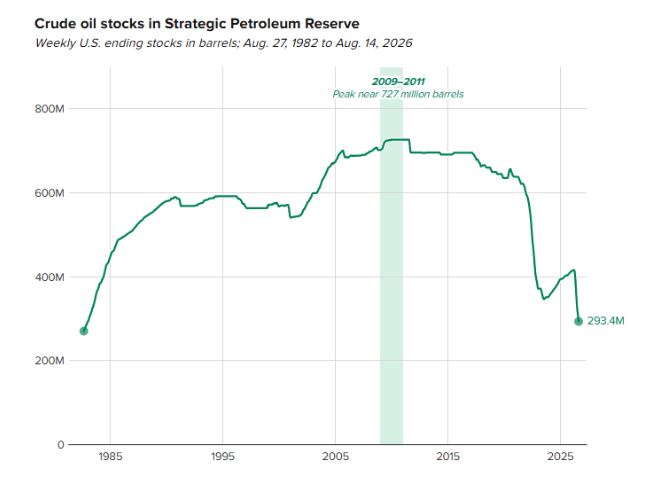
Strategic petroleum reserve reaches historic lows. The reserve’s decline raises concerns about its ability to respond to future energy emergencies, with reserves hitting a four-decade low following new releases.

The U.S. Strategic Petroleum Reserve fell below 300 million barrels, its lowest level since it was filled in the 1980s. After releasing 172 million barrels in response to disruptions stemming from the conflict with Iran, inventories could decline to around 243 million barrels. Experts warn that lower levels could limit the ability to respond to future emergencies.

The SPR drawdown has renewed debate over its appropriate operating level. Experts place a practical range between 250 and 300 million barrels and warn of infrastructure risks, while the Department of Energy rejects concerns that the caverns are in danger. Lower inventories could limit U.S. flexibility in responding to future energy disruptions.

Monitor

Source: U.S. Energy Information Administration

Multi Family Office Services: A Guide for Families

Multi family office services give several families coordinated access to shared expertise, systems, and administrative resources—connecting investments, planning, governance, and the work of attorneys, CPAs, and other trusted professionals. For a family managing business interests, property, philanthropy, and relatives across borders, this coordinated model can be meaningfully different from a single-account advisory relationship. This article explains what that work can include and how families can evaluate the fit.

Speak with a fiduciary advisor about your family’s priorities

Depending on the provider, multi family office services may include wealth management, portfolio consolidation and reconciliation, family business planning, investment manager analysis, estate and succession coordination, philanthropy, and vendor cost review. The right scope depends on a family’s circumstances, priorities, and existing professional team.

The value is not simply having more services. Instead, it comes from a disciplined process for connecting investments with planning, family governance, and the work of attorneys, CPAs, and other trusted professionals. Activest’s family office services provide one example of this coordinated approach. Families beginning with the broader guide to preserving generational wealth can use this article to examine the work behind the model.

What Do Multi Family Office Services Include?

A multi family office brings several families into a shared advisory structure. Families share access to professionals, research, technology, and administrative infrastructure while receiving advice tailored to their own circumstances. Importantly, shared resources do not mean identical recommendations, portfolios, or priorities.

The service model can extend well beyond investment selection. A family may need a consolidated view of accounts, coordination with a CPA and attorney, help evaluating outside managers, or a process for transferring responsibilities to the next generation. Ask which capabilities the provider delivers directly, which professionals they coordinate through, how they address conflicts, and how they protect information. Also ask how the team documents decisions, how family members receive reports, and how the provider handles late or incomplete information.

Family and fiduciary advisor discussing coordinated multi family office services
Service areaWhat it can help organize
Wealth managementInvestment priorities, financial planning, and risk decisions
Portfolio consolidationA clearer view across custodians, managers, and accounts
Estate and succession coordinationCommunication among family members, attorneys, and tax professionals
Manager analysisReview of mandates, fees, risk, liquidity, and ongoing fit
Vendor cost reviewAssessment of overlapping services, fees, and relationships

This table is a planning framework, not a promise that every provider offers every service. Activest does not provide legal or tax advice directly. Clients should consult their CPA or other tax professional about their specific situation.

How Do Multi Family Office Services Improve Reporting?

Families often hold accounts at multiple custodians, investment managers, banks, and private-market providers. Without a consistent process, seeing overall exposure, liquidity, cash flows, and progress toward objectives becomes difficult. Consolidation gathers relevant information into a clearer reporting view. Moreover, reconciliation checks that information against custodian and manager records.

Creating Alignment Across Records

Consolidated reporting can help identify duplicated exposures, missing data, unexpected cash balances, or differences between reports. It can also make meetings more productive because discussions begin with a shared information set rather than disconnected statements. However, the process does not eliminate investment risk, and a consolidated view is only as useful as the information the relevant institutions supply.

Activest describes an in-house reconciliation process within its family office offering. Families should ask how often the team updates data, how they handle exceptions, what information remains unavailable, and who resolves discrepancies. Learn more about Activest’s broader wealth management services.

How Are Estate and Succession Plans Coordinated?

Estate and succession planning is an ongoing coordination process. It involves family goals, ownership structures, trusts, insurance, charitable intentions, business interests, and the people expected to carry responsibilities forward. Furthermore, a multi family office can help keep financial and family conversations connected while attorneys and tax professionals provide advice within their areas of practice.

Supporting Governance and Communication

Useful coordination may include organizing information for professional advisers, clarifying decision-making roles, preparing families for ownership transitions, and helping next-generation members understand responsibilities tied to wealth. It can also surface questions before a major transition—such as who has authority, how the team maintains records, and how family members communicate when priorities differ.

Cross-border families may face additional complexity because assets, relatives, entities, and professional advisers can sit in more than one jurisdiction. The appropriate legal and tax treatment is fact-specific. Therefore, families should involve qualified counsel and tax professionals before acting. A wealth manager can coordinate the planning conversation but does not replace the family’s legal or tax advisers.

What Does Investment Manager Analysis Involve?

Some families use several external investment managers or hold a mix of public and private investments. Manager analysis organizes the review of those relationships. Specifically, it may consider each manager’s role, mandate, portfolio construction, fees, liquidity, risk exposures, reporting, and fit with the family’s broader objectives.

Start with the Mandate, Not Only the Track Record

A historical result is only one part of a review. Families should understand the manager’s mandate and the risks taken to pursue it. They should also consider the period under review and how the strategy interacts with other holdings.

Ongoing monitoring matters because mandates, teams, markets, fees, and family circumstances can all change. No review can guarantee a particular investment result, and all investments carry risk, including possible loss of principal.

Families should ask how the adviser makes recommendations, how they identify conflicts, and whether they hold a fiduciary obligation. The appropriate analysis depends on the family’s objectives, time horizon, liquidity needs, and tolerance for loss.

Discuss a coordinated family-office approach with Activest

Can Vendor Cost Review Improve Family Office Value?

A family office may coordinate relationships with custodians, technology providers, insurance professionals, and other vendors. A provider serving multiple families may have experience comparing arrangements and spotting avoidable duplication. The goal is not automatically to choose the lowest-cost provider. Rather, it is to understand what a family pays, what it receives, and whether the arrangement remains appropriate.

A cost review should consider fee clarity, overlapping services, independence, security, responsiveness, continuity, and any referral or compensation arrangement that could create a conflict. It should distinguish a lower invoice from a better overall arrangement. A less expensive service may create more administrative work or reduce access to useful expertise. Any savings are not guaranteed and depend on the family’s current arrangements. Evaluate a vendor decision in light of the family’s complete needs and privacy expectations.

How Can Philanthropy and the Next Generation Fit the Plan?

Philanthropy and impact investing can connect to a family’s broader values and governance conversations. A family may use these discussions to clarify what it wants to support, how it makes decisions, and how younger members participate. The financial, legal, and tax implications of a charitable strategy are specific to each family and should be reviewed with qualified professionals.

Next-generation planning can be practical rather than ceremonial. Families may establish meeting routines, explain the purpose of different holdings, define responsibilities, and create a process for questions. A family office can coordinate these conversations with investment, estate, and tax advisers. Activest lists philanthropy and impact investing among its wealth management services; the appropriate approach depends on each family’s objectives and risk tolerance.

Families can make an initial review more efficient by following five steps:

  1. List the family’s entities, accounts, managers, jurisdictions, and key professional advisers.
  2. Identify disconnected decisions involving reporting, liquidity, succession, or vendor oversight.
  3. Ask prospective providers which responsibilities they handle directly, coordinate, or leave with another professional.
  4. Review fees, conflicts, data practices, communication expectations, and the limits of legal and tax support.
  5. Document the agreed responsibilities and schedule a review as family circumstances change.

This process helps a family compare providers based on fit and coordination rather than a long list of features alone.

Contact Activest to explore your family’s priorities

Frequently Asked Questions

What services does a multi family office provide?

Services vary by provider but commonly include wealth management, portfolio consolidation and reconciliation, investment manager analysis, estate and succession coordination, family business planning, philanthropy support, and vendor review. Ask which capabilities the provider delivers directly and which they coordinate with outside professionals, so you understand the full scope before engaging.

How much do multi family office services cost?

Fees depend on the provider’s service model, the complexity of the family’s affairs, assets managed, and the level of coordination required. Arrangements may involve an annual retainer, an assets-under-management-based fee, or a combination; the range varies widely by scope and provider (illustrative only). Request a clear explanation of fees, included services, potential additional costs, and any conflicts or compensation arrangements before signing an agreement.

Is there a minimum net worth requirement for a multi family office?

There is no single industry-wide minimum. Each provider sets its own eligibility criteria based on capacity, service design, and the needs it is equipped to support. Ask whether the provider has relevant experience with the family’s investments, businesses, jurisdictions, and planning relationships—fit matters as much as any stated threshold.

How should a family evaluate a multi family office?

Compare fiduciary status, relevant experience, service scope, communication practices, conflicts policies, and data security. Ask how the provider consolidates information, reviews outside managers, documents recommendations, and handles changes in family circumstances. Direct legal and tax questions to qualified professionals, and confirm in writing which services the family office delivers versus coordinates.

What is the difference between a single family office and a multi family office?

A single family office serves one family exclusively, typically requiring substantial assets to justify the cost of dedicated staff and infrastructure. By contrast, a multi family office shares those resources across several families, which can make sophisticated coordination more accessible. The trade-off is that resources are shared. Families should evaluate whether shared infrastructure meets their privacy, customization, and responsiveness expectations.


This article is for informational and educational purposes only and is not intended as, and should not be relied upon as, tax, legal, immigration, estate planning, or investment advice. The effectiveness of any pre-immigration trust or estate planning strategy depends on the family’s specific facts, including residency status, citizenship, domicile, asset location, source of income, trust terms, timing of transfers, retained powers, beneficiary status, applicable U.S. and non-U.S. tax rules, and ongoing administration. Trust planning may involve significant costs, complexity, reporting obligations, and potential tax consequences. Improperly structured or administered trusts may result in adverse income, gift, estate, generation-skipping transfer, or reporting consequences, including penalties.

U.S. and non-U.S. tax laws are complex and subject to change, and future legislation, regulations, or guidance may affect the planning concepts discussed. Any examples are hypothetical and for illustrative purposes only. They do not represent actual client results, do not guarantee any tax or financial outcome, and should not be interpreted as a recommendation to implement any particular trust, estate, or investment strategy. All investing assumes risk of loss. Families should consult qualified U.S. and non-U.S. tax counsel, estate planning counsel, immigration counsel, and other professional advisers before implementing any strategy.

How Much Does a Family Office Cost? Fees Explained

For a high-net-worth family, family office cost depends on structure, services, and the complexity of work being coordinated. A dedicated office carries its own staffing and infrastructure costs. A multi-family office shares certain resources across households. An outsourced or hybrid model may price each function separately. Understanding these differences helps families compare proposals more clearly.

Discuss your family’s needs with Activest.

No single standard family office cost exists. Fees may rely on assets under management, a retainer, project work, pass-through expenses, or a combination. Therefore, the most useful comparison examines the services included, third-party costs, cross-border complexity, and who holds accountability for coordinating the family’s financial picture.

This question matters especially for Latin American families with assets, businesses, or family members in more than one country. A headline fee may not show the full cost of reporting, manager oversight, or estate and succession coordination. This guide explains the main fee structures and the questions to ask before comparing proposals. For broader context, see Activest’s family office education guide and its overview of family office services.

How Family Office Cost Reflects Different Fee Structures

Family office fees commonly take one of five forms: an assets-under-management charge, a recurring retainer, project fees, pass-through expenses, or a combination. Each model prices a different kind of work. Start any review with the engagement scope, not the percentage alone. Two similar-looking fees can cover very different responsibilities.

Assets-under-management fees

An assets-under-management (AUM) fee is a percentage of the assets an adviser manages. Depending on the agreement, it may cover investment oversight, financial planning, reporting, relationship management, and coordination. Activest’s February 2026 Form CRS describes a tiered wealth-management fee schedule ranging from 1.00% on assets under $5 million to 0.65% on assets over $20 million. The written agreement controls the applicable percentage, asset scope, services, and billing terms. This schedule is not a universal family-office price or a quote.

Families should ask whether an AUM fee applies to all accounts or only selected assets. They should also clarify how the firm handles assets it does not manage — private investments, cash, and accounts held with other custodians. Fund expenses, custody charges, and other third-party costs may sit outside the adviser fee. Activest’s Form CRS provides the cited fee context; prospective clients should review the current agreement and disclosures before making a decision.

Retainers and project fees

A retainer charges for an agreed package of ongoing work rather than tying every fee dollar to managed assets. This structure may suit a family seeking consolidated reporting, governance support, or coordination across accounts that are not all managed by one firm. The engagement should state what the retainer includes, how often work arrives, and how additional requests are handled.

Project fees apply to a defined assignment — preparing for a business transition, organizing a family governance process, or reviewing a fragmented reporting structure. A clear scope, deliverable, timeline, and approval process help prevent an undefined project from becoming an unexpected expense. Ask whether project work fits within the ongoing relationship or gets billed separately.

Pass-through and third-party costs

Families may still carry responsibility for legal, tax, custody, insurance, accounting, or specialist consulting costs. These expenses are not necessarily adviser compensation. Ask whether the firm pays, marks up, coordinates, or simply passes through each cost. Also ask who approves outside work and how those invoices get reported.

When reviewing wealth management services, request a complete fee schedule and a plain-English explanation of every category. Fees, services, and risks vary by family and agreement. This educational discussion is not individualized investment, tax, or legal advice; consult your CPA, tax professional, and legal counsel about your specific circumstances.

How Family Office Cost Changes by Structure

A single-family office carries the full cost of internal staff, systems, premises, administration, and specialist relationships. A multi-family office may share infrastructure and expertise across households, though that shared model can limit customization or dedicated access. An outsourced model can be more modular. Families should compare accountability, scope, control, and total coordination effort alongside the quoted fee.

StructureHow costs are commonly allocatedKey question to ask
Single-family officeThe family carries staffing, systems, premises, administration, and specialist costs.What is the full annual operating budget?
Multi-family officeHouseholds share selected infrastructure and professional resources under a defined service model; shared structure may limit customization or dedicated responsiveness.Which services and resources are included?
Outsourced or hybridFunctions are divided among an adviser and the family’s existing professional network.Who is accountable for coordination?

Single-family office economics

A single-family office is an internal cost center. Its expense extends beyond an adviser invoice. Personnel, technology, reporting systems, office operations, compliance, insurance, and outside legal or tax specialists all contribute to the total. Moreover, the family carries the responsibility of hiring, supervising, and retaining the people who perform those functions.

This structure can provide direct control and a highly dedicated team. Staffing can become harder, however, when the family needs specialist knowledge across multiple jurisdictions or disciplines. Any family considering this model should estimate the full operating budget — not just the cost of an investment professional. They should also define who supervises the office and how the family reviews performance, conflicts, and risk.

Multi-family office economics

A multi-family office shares systems and expertise across households. That sharing may make consolidated reporting, investment manager analysis, governance support, and coordination with outside professionals more accessible than hiring each capability directly. The tradeoff is that the family must understand how the provider allocates resources and whether the service model delivers the responsiveness and customization the family expects.

Ask how the provider defines the client relationship. Does one team coordinate the family, or will the household need to manage several separate specialists? Clarify which services are included, which are optional, and whether fees apply to managed assets, a broader asset base, or a separate planning relationship. The answer can change the total value even when the headline percentage looks similar.

Outsourced and hybrid models

An outsourced model can combine an investment adviser with the family’s existing attorneys, CPAs, bankers, insurance professionals, and other specialists. A hybrid arrangement can work well when the family wants a central coordinator without building a complete internal office. However, gaps can appear when no party holds clear responsibility for the whole picture.

Before choosing a hybrid model, create a responsibility map. For each major decision, identify the lead professional, the supporting professionals, and the required information. Also identify who communicates the final recommendation to the family. Coordination delivers value only when it is explicit, documented, and maintained over time.

Do not judge an outsourced provider only by whether its fee is lower than the apparent cost of a dedicated office. Instead, compare the time the family must spend, the quality of reporting, and the availability of specialist coordination. A lower invoice may not represent a lower total cost if the family must recreate the coordination function itself.

What Does Family Office Cost Include?

Depending on the provider, family office fees may include wealth management, financial planning, account consolidation, portfolio reconciliation, investment manager analysis, family business planning, estate and succession coordination, governance support, and vendor oversight. The exact scope varies by agreement. Families should map each desired function to a named responsibility and an identified fee.

Family reviewing coordinated wealth management services with an advisor
  • Wealth management and financial planning: Investment oversight, liquidity planning, cash flow analysis, retirement planning, and risk coordination.
  • Account consolidation and portfolio reconciliation: Bringing accounts, custodians, entities, and investments into a coherent view.
  • Investment manager analysis: Reviewing external managers, mandates, fees, exposures, and alignment with the family’s objectives.
  • Family business and strategic planning: Helping a family organize decisions around ownership, liquidity, governance, and continuity.
  • Estate, succession, and tax coordination (coordinated with the family’s attorneys and CPAs): Working with the family’s legal and tax team so planning decisions are understood across the professional team.
  • Vendor and professional coordination: Organizing outside providers, clarifying responsibilities, and identifying opportunities to reduce avoidable costs.

These services do not all have to come from one firm. Even so, someone should still be responsible for keeping the plan coordinated. A proposal that lists investments without explaining reporting, planning, communication, and specialist coordination may not address the family’s actual need.

Activest describes its family office offering as including wealth management, consolidation and portfolio reconciliation, family business and strategic planning, investment manager analysis, estate and succession coordination, and vendor cost review. Activest does not provide legal or tax advice directly; families should consult their CPA, tax professional, and legal counsel for advice on their specific situation.

For families comparing a broad service relationship, the Activest family office overview and wealth management overview can help identify which functions need discussion. The written proposal remains the source of truth for scope and pricing.

How Cross-Border Complexity Affects the Family Office Cost Equation

Cross-border complexity can raise family office cost because a family’s financial decisions may involve multiple jurisdictions, currencies, entities, custodians, and professional teams. The key question is not whether a provider can eliminate complexity. Rather, it is whether the provider can help the family see the connections, organize the information, and coordinate the right professionals.

A family with roots in Latin America may have U.S. investments, a business abroad, real estate in more than one country, and relatives with different residency or citizenship profiles. Those facts can affect reporting, liquidity planning, estate discussions, and the questions a CPA or attorney needs answered. Fragmented communication — when no person holds a complete view — can add cost quickly.

Families should ask who coordinates with counsel and how the adviser consolidates information from multiple custodians. Additionally, ask how the team documents decisions and which services the adviser performs versus which outside professionals handle instead. Providers can explain their coordination role; for tax and legal outcomes, the family should rely on qualified attorneys and CPAs.

Cultural understanding and communication discipline can matter here. A family may need a team that works comfortably across languages, locations, and generations. Activest’s guide to preserving generational wealth offers related planning context, while its family office work can help connect the financial, reporting, and succession conversations.

How Do You Evaluate Whether a Family Office Is Worth the Cost?

A family office may be worth the cost when the coordination, oversight, and planning it provides clearly exceed the fees and effort required. Base the decision on scope, accountability, transparency, and fit — not on a percentage alone. Compare the expected value with the family’s actual priorities and complexity.

  1. Define the decisions that need support. List the family, investment, business, estate, reporting, and liquidity questions that currently require attention.
  2. Map the professional network. Identify the advisers already involved and the gaps between them. Note who receives information, who makes recommendations, and who communicates with the family.
  3. Request an all-in fee explanation. Separate adviser compensation from custody, fund, legal, tax, insurance, accounting, and other outside costs.
  4. Test the reporting and coordination process. Ask to see a sample reporting structure or a description of how accounts, entities, managers, and action items are organized. Do not rely on a presentation that does not explain the ongoing process.
  5. Review conflicts and fiduciary responsibilities. Understand how the firm is paid, what products or services it may recommend, and what duties are described in its disclosures.
  6. Confirm the service relationship in writing. The agreement should identify scope, billing, termination terms, responsibilities, and the treatment of work outside the standard engagement.

For a family navigating a sale, retirement, succession event, or relocation, the right structure may change over time. Revisit the service model when the family’s assets, businesses, jurisdictions, or decision-making needs change. In our view, a well-structured relationship is designed to make the family’s financial life more understandable, not simply add another invoice.

Learn more about Activest’s independent fiduciary team before comparing providers, and bring your CPA and legal counsel into any discussion that involves tax or legal questions.

Talk with Activest about coordinating your family’s wealth plan.

Frequently Asked Questions About Family Office Cost

What is the average family office cost?

No reliable universal average exists. Family offices differ in structure, services, staffing, asset scope, and complexity. A single-family office carries its own full operating budget. A multi-family office shares resources across households. An outsourced model prices functions separately. Rather than relying on a broad industry figure, compare the complete fee schedule, the services covered, and third-party costs against your family’s actual needs.

Is a multi-family office less expensive than a single-family office?

A multi-family office may share infrastructure and specialist resources, which can make certain capabilities more accessible than hiring them directly. A single-family office, by contrast, carries its own full operating costs. The more useful comparison includes service scope, responsiveness, control, outside expenses, and the family’s time — not the headline fee alone. A shared model may also offer less customization or dedicated access than a fully dedicated office.

Are legal and tax services included in family office fees?

Not always. Families should ask whether legal, tax, accounting, insurance, custody, and specialist costs are included, coordinated, or billed separately. Many providers coordinate with the family’s existing attorneys and CPAs rather than providing those services directly. Activest does not provide legal or tax advice; clients should consult their own qualified professionals for advice on their specific situation.

How are family office fees usually calculated?

Fees may rely on assets under management, a retainer, project work, pass-through expenses, or a combination of these. AUM fees are typically tiered by asset level. Retainers cover an agreed package of ongoing services. Project fees apply to defined assignments. The written agreement should define the assets covered, billing schedule, services included, and any additional costs outside the base fee.

What should I ask before hiring a family office?

Ask who is accountable for coordination across your full financial picture. Ask which services are included versus billed separately. Clarify how outside costs such as custody and legal fees are handled, how conflicts of interest are disclosed, and how reporting works across accounts and jurisdictions. Get the full scope and fee terms in writing, and involve your CPA and legal counsel before finalizing any engagement.


This article is for informational and educational purposes only and is not intended as, and should not be relied upon as, tax, legal, immigration, estate planning, or investment advice. The effectiveness of any pre-immigration trust or estate planning strategy depends on the family’s specific facts, including residency status, citizenship, domicile, asset location, source of income, trust terms, timing of transfers, retained powers, beneficiary status, applicable U.S. and non-U.S. tax rules, and ongoing administration. Trust planning may involve significant costs, complexity, reporting obligations, and potential tax consequences. Improperly structured or administered trusts may result in adverse income, gift, estate, generation-skipping transfer, or reporting consequences, including penalties.

U.S. and non-U.S. tax laws are complex and subject to change, and future legislation, regulations, or guidance may affect the planning concepts discussed. Any examples are hypothetical and for illustrative purposes only. They do not represent actual client results, do not guarantee any tax or financial outcome, and should not be interpreted as a recommendation to implement any particular trust, estate, or investment strategy. All investing assumes risk of loss. Families should consult qualified U.S. and non-U.S. tax counsel, estate planning counsel, immigration counsel, and other professional advisers before implementing any strategy.

September

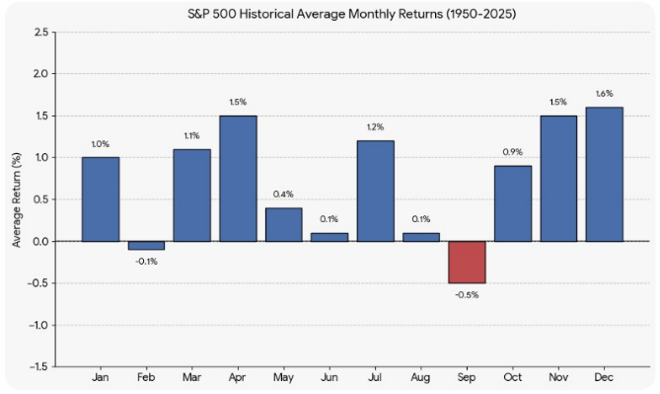
September has historically been the weakest month for the stock market. History calls for caution, without losing perspective.

September has historically been the most challenging month for the stock market. Since the late 19th century, the Dow Jones has ended September higher only 43% of the time, compared with 60% for the rest of the year. Its average return during the month has been -1.1%, versus +0.8% for all other months. While the pattern is statistically significant, history does not necessarily determine future performance.

Seasonality can provide useful context, but it should not drive investment decisions on its own. Economic, corporate, and market factors typically carry greater weight. In fact, the Dow Jones gained in each of the past two Septembers, reminding us that historical patterns reflect probabilities, not certainties.

Monitor

Source: CFRA Research / S&P Dow Jones Indices

Single Family Office vs Multi Family Office: A Guide

For a family with wealth, businesses, property, and relationships across countries, the single family office vs multi family office decision is rarely just about where assets are held. It is about how much control, coordination, and dedicated infrastructure the family needs to manage them responsibly.

Learn more about family office services before comparing the two structures.

In a single family office vs multi family office comparison, a single-family office offers dedicated staffing and maximum customization for one family. A multi-family office shares specialized resources across families. This often reduces operational complexity and individual cost. The right fit depends on the family’s wealth, governance priorities, privacy expectations, and cross-border needs.

For Latin American families in South Florida, those needs may include coordinating several jurisdictions, preparing the next generation, and preserving a family legacy. Understanding each structure is the first step toward a thoughtful comparison.

What Is a Single-Family Office?

A single-family office, or SFO, is a dedicated organization one family creates to manage its investments and broader financial affairs. Rather than serving multiple households through a shared platform, the office builds around one family’s priorities, relationships, governance preferences, and long-term definition of wealth. This model generally suits ultra-high-net-worth families, often those with more than $100 million in assets. However, that figure is a descriptive industry reference, not a universal legal or practical threshold. Research from the University of Miami describes the SFO as a dedicated structure for one family’s investments and financial affairs.

What Does an SFO Control?

The central appeal is control. A family can set its own investment philosophy, risk-management approach, reporting standards, privacy practices, and decision-making process. It can select the professionals it wants. The family also determines how the office coordinates with attorneys, CPAs, banks, insurance specialists, and operating businesses. The structure can fit around family governance, succession, philanthropy, next-generation education, or complex holdings in more than one country. Building that flexibility, however, requires the family to staff, fund, and oversee its own organization.

That flexibility can be valuable for a family whose circumstances do not fit a standard service model. Consider a family with a business sale, multiple entities, and relatives across Latin America and the United States. They may want one dedicated team to understand the full context. An SFO can make that context the foundation of its work. It may also provide strong privacy, because the staff and systems serve one family alone, subject to the family’s governance and professional arrangements.

What Is the Operational Tradeoff of a Single-Family Office?

Customization does not remove complexity. The family carries the full burden of recruiting qualified professionals, setting policies, maintaining technology, and coordinating outside advisers. It also manages operational and regulatory duties. A dedicated team may need expertise in investments, accounting, reporting, cybersecurity, administration, estate and succession coordination, and cross-border matters. Those capabilities can require substantial fixed costs even when a particular function is not used every day.

For that reason, an SFO is not automatically the best choice for every wealthy family. The right evaluation considers complexity, desired control, available internal oversight, and willingness to run an organization — not simply an asset figure. Families should consult qualified legal and tax professionals before choosing a structure or acting on any planning decision.

Does a Family Need $100 Million to Establish an SFO?

No fixed number answers that question. Asset size can influence whether dedicated staffing and infrastructure make economic sense. Yet complexity, privacy needs, control preferences, and family goals also matter. Treat the commonly cited $100 million figure as context, not a rule. A careful single family office vs multi family office comparison should examine the full cost of running the model. It should also weigh the responsibility involved alongside the benefits of dedicated attention.

What Is a Multi-Family Office?

A multi-family office (MFO) manages the financial affairs of several families through a shared platform. Instead of building a private organization for one household, each family draws on a common team, operating infrastructure, technology, and network of specialists. Sharing these resources can reduce each family’s individual overhead while preserving a coordinated approach to complex wealth.

The model serves families that want more than investment selection alone. An MFO may coordinate portfolio reporting and asset consolidation, evaluate investment managers, and support governance and succession planning. It may also help organize relationships with outside tax and legal professionals. For a family with assets, entities, and advisers spread across the United States and Latin America, that coordination can matter as much as any individual investment decision.

Scale Without Building Every Function In-House

Operating a single-family office means carrying the full responsibility for staffing, systems, cybersecurity, regulatory oversight, vendor relationships, and continuity. A multi-family office spreads those operational demands across multiple client families. That shared structure can make institutional-grade capabilities more accessible. No single family needs to hire and supervise a complete internal department for every specialty.

Scale does not mean every family receives an identical plan. The strongest MFOs use shared capabilities behind the scenes while adapting work to each family’s priorities, risk tolerance, ownership structures, liquidity needs, and legacy goals. The practical benefit is access to a broader bench of expertise with less administrative friction. Potentially, it also means lower individual costs than a comparable standalone office would require.

Independence and Fiduciary Alignment in a Multi-Family Office

Efficiency should not be the only test. Families should ask how the MFO earns its fees and whether it is affiliated with a broker-dealer or product provider. They should also ask how it discloses conflicts and who is legally responsible for advice. Activest Wealth Management operates as an independent, fiduciary-only registered investment adviser. In our view, that structure is designed to keep the conversation centered on the family’s interests rather than on distributing proprietary products.

For Latin American families in South Florida, the right MFO should also understand cross-border complexity without presenting tax or legal conclusions as one-size-fits-all answers. Tax and legal professionals remain essential partners. An MFO can help the family coordinate information, decisions, and advisers so that investment, estate, succession, and cross-border planning are considered together.

If you are evaluating whether a multi-family office model fits your family’s needs, contact Activest to learn more about its approach to coordinated wealth management.

How Does Single Family Office vs Multi Family Office Cost Compare?

The most useful cost comparison is not a universal price tag. It is an examination of what a family pays for, which responsibilities it wants to keep, and how broadly the office’s resources will be used. Fees can vary with assets, complexity, geography, service scope, investment approach, and the level of coordination required. A published overview from the University of Miami notes that some family wealth management teams earn fees as a percentage of assets under management. Illustrative ranges cited in the literature run roughly 1% to 2%. This is a general illustrative reference only. Actual fees vary widely and may fall outside this range. It is not Activest pricing or a quote for any family’s services.

An SFO generally carries the full cost of building and maintaining a dedicated operation. An MFO distributes selected costs across multiple client families. That can make specialized capabilities more accessible without requiring one household to fund every employee, system, and control function alone. The tradeoff is that an MFO’s resources and processes must serve more than one family, even when the advice and implementation are tailored to each client.

Comparing Single Family Office and Multi Family Office Cost Drivers

Cost drivers in a single-family office and a multi-family office
Cost driverSingle-family officeMulti-family office
StaffingThe family funds dedicated employees, leadership, specialists, and backup capacity.Families share access to a broader team, with staffing costs allocated across the client base.
OverheadThe family typically carries the full cost of technology, facilities, insurance, administration, and compliance support.Systems, operations, reporting, and other infrastructure can be shared, reducing each family’s standalone burden.
CustomizationOffers maximum control over priorities, workflows, investment philosophy, and risk-management processes.Can provide tailored advice within an established platform and service model.
PrivacyA dedicated structure may offer the family greater control over information flows and internal access.Requires careful due diligence on confidentiality, data controls, and how information is separated between families.
Shared resourcesSpecialists and institutional tools are funded and managed for one family, whether fully utilized or not.Families may gain access to shared expertise, manager analysis, reporting, and cross-border capabilities.
ScalabilityAdding services or staff can increase cost and operational complexity directly for the family.Established systems may make it easier to expand coordination as assets, entities, or family needs change.

Why Cost Alone Does Not Determine Value

These differences help explain why an SFO can cost more to operate than an MFO. The SFO has no chance to share expenses across families. The MFO model builds around economies of scale and shared expertise, potentially lowering the individual cost of access to institutional-grade resources. That does not mean every MFO is less expensive, or that lower fees automatically represent better value. Service depth, conflicts, responsiveness, investment implementation, and the quality of coordination matter as much as the fee structure.

For a family with assets or relationships across Latin America and the United States, the relevant question is whether the arrangement can coordinate complexity responsibly. Families should ask how fees are calculated, which services are included, and what the office bills separately. They should also ask how it handles additional legal, tax, custody, or specialist work. Any decision should go through the family’s qualified investment, tax, and legal professionals.

What Services Do Family Offices Provide?

The work of a family office extends beyond selecting investments. It coordinates the financial decisions that affect a family’s capital, businesses, relationships, and long-term legacy. The exact scope differs between an SFO and an MFO, but the objective is similar: bring connected parts of wealth management into a coherent plan.

Investment Oversight and Consolidation

Investment management is one core service. A family office may help establish an investment philosophy, define risk parameters, evaluate opportunities, and monitor portfolios over time. It can also consolidate information across custodians, private investments, operating businesses, real estate, and other holdings. This broader view helps the family understand what it owns, how exposures interact, and whether decisions remain aligned with its goals.

Manager analysis is another important layer. Rather than evaluating each investment in isolation, a family office can review managers for fit, costs, risk, process, and overlap with the rest of the portfolio. That analysis may be especially useful when a family holds relationships and accounts across multiple countries or institutions.

Planning, Governance, and Succession

Family offices often support governance and planning. Topics can include decision rights, communication, next-generation education, philanthropy, and continuity. Succession planning can help a family-owned business prepare for leadership transition and preserve wealth across generations. Because these matters involve individual legal and tax structures, a family office should work alongside the family’s CPA, tax professional, and attorney. Those professionals provide the legal and tax advice that a general educational article cannot provide.

Cross-Border Coordination and Operational Efficiency

For Latin American families living in South Florida, cross-border planning may be central rather than peripheral. A modern family office may coordinate information and conversations around assets, entities, obligations, and family members in more than one jurisdiction. Cross-border planning, tax coordination, and asset consolidation are recognized as complex family-office needs. However, qualified professionals must tailor any recommendations to each family’s specific facts (source overview).

An MFO can also provide shared operational resources, including reporting, reconciliation, manager research, and vendor oversight. Shared expertise may reduce the burden of staffing every function internally, while vendor cost analysis can help families assess whether they pay appropriately for essential services. Activest describes this coordinated approach through its family office services and coordinated wealth management offerings.

Which Model Fits a Latin American Family With Cross-Border Wealth?

The central question in a single family office vs multi family office evaluation is not simply which structure sounds more prestigious. It is whether the structure can coordinate investment decisions, reporting, governance, and professional relationships across jurisdictions without creating unnecessary friction.

For Latin American families who have relocated to South Florida, this coordination can become especially important. A family may manage a U.S. residence, an operating company or property abroad, accounts in multiple markets, and family members with different levels of involvement. A family office can help bring those moving parts into a shared planning conversation. Meanwhile, the family’s CPA and legal advisers address the specific tax and legal consequences.

Can the Structure Coordinate Wealth Across Jurisdictions?

Cross-border planning often involves more than investment selection. It may require consolidating a family’s financial picture, coordinating with advisers in different countries, and analyzing investment managers. It may also involve identifying how ownership or succession decisions affect the broader family balance sheet. These needs are especially relevant after a liquidity event, when proceeds from a business sale must fit into a long-term plan.

An SFO can offer dedicated personnel and maximum control over how that work is organized. The family sets the office’s priorities, staffing, processes, and investment philosophy. That level of customization can be valuable. However, the family also carries the full burden of recruiting specialists, supervising operations, and maintaining oversight.

Shared Resources vs. Dedicated Infrastructure

An MFO manages the financial affairs of multiple families and can share resources to create operational efficiencies. For a family that needs sophisticated coordination but does not want to build every capability internally, shared expertise may provide a practical alternative. The relevant test is not whether services come from a dedicated office bearing one family’s name. It is whether the team can work effectively with the family’s existing tax, legal, banking, and investment professionals.

How Do Governance and Next-Generation Needs Affect the Choice?

For legacy families, governance and multigenerational wealth transfer may matter as much as portfolio management. A useful structure can create regular forums for family decision-making, clarify responsibilities, and help next-generation members learn how wealth is stewarded. It should also support continuity when a founder, business owner, or principal decision-maker is no longer involved day to day.

Privacy and control may point some families toward an SFO. Others may value the independence, shared infrastructure, and reduced operational burden that an MFO offers. Neither model removes the need for clear family agreements, qualified professional advice, and disciplined communication. The right comparison is therefore about capabilities, governance, responsiveness, and fit with the family’s evolving life, business, and legacy priorities.

Contact Activest to explore the questions a cross-border family office structure should address.

How Should a Family Decide Between an SFO and an MFO?

  1. Begin with the family’s goals. Clarify whether the priority is a fully dedicated organization, maximum customization, and direct control, or coordinated access to broader expertise and shared resources. A single-family office can build around one family’s investment philosophy and risk-management approach. A multi-family office may fit better when the family wants comprehensive support without building every function internally. There is no universal legal structure for a family office. The right design depends on the family’s vision, investment strategy, and desired scope of services.
  2. Define the required level of control and privacy. Ask who should make investment, governance, hiring, and reporting decisions, and how much information should stay within the family. An SFO generally provides a more dedicated structure, while an MFO requires the family to understand its confidentiality policies, decision rights, and service model. Evaluate privacy through documented controls and practical procedures, not assumed from a label.
  3. Measure staffing and overhead honestly. List the roles the family would need, such as investment oversight, accounting, reporting, legal coordination, tax coordination, and administration. An SFO carries the full burden of staffing, technology, operations, and regulatory oversight. An MFO can share institutional-grade resources and expertise across families, potentially reducing each family’s operational burden and individual costs. Fees vary significantly with asset size, complexity, services, and structure. As a result, a quoted percentage or general industry range is not a substitute for a full cost comparison.

Weigh Cross-Border, Governance, and Regulatory Factors

  1. Map the cross-border complexity. Identify the countries involved, residence and citizenship questions, entities, trusts, operating businesses, concentrated positions, and reporting obligations. Families from Latin America who have relocated to South Florida may need coordinated tax and estate planning across jurisdictions. Ask whether the proposed office has the experience and professional network to coordinate that work. Tax and legal conclusions must come from the family’s qualified CPA and attorneys.
  2. Test the governance model. Establish how the family will record decisions, how the next generation will take part, and how succession or a liquidity event will be handled. Governance and multigenerational wealth transfer are central concerns for legacy families. An MFO can support this coordination, but the family should still define its own values, authority, and accountability structure.
  3. Review the regulatory question with qualified professionals. The SEC family office rule is narrower than the everyday use of the phrase family office. Among other requirements, the rule addresses whether an office is exclusively controlled by family members or family entities and whether family clients wholly own it. The SEC’s staff responses also explain that the right to appoint or replace directors, by itself, does not establish exclusive control. Read the SEC staff guidance on the family office rule, then ask qualified legal and compliance professionals to assess the specific structure. Do not assume every SFO or MFO has the same regulatory status, and do not treat this checklist as legal or tax advice.

Frequently Asked Questions

What Is the Main Difference Between a Single-Family Office and a Multi-Family Office?

A single-family office serves one family with dedicated staff, concentrated control, and highly customized operations. A multi-family office serves several families, allowing them to share professional resources, technology, and operational capabilities. The practical choice often turns on how much control and customization a family needs versus how much it values shared expertise and efficiency.

When Should a Family Consider a Single-Family Office?

An SFO may fit a family that needs dedicated staffing, strong privacy, and direct control over its structure and priorities. It also means the family carries the full cost and responsibility for hiring, oversight, operations, and regulatory coordination. Asset size alone should not drive the decision, because complexity, governance goals, and the desired scope of services matter as well.

What Are the Advantages of a Multi-Family Office for Latin American Families?

An MFO can provide coordinated investment management, asset consolidation, manager analysis, succession planning, and cross-border expertise without requiring one family to build every capability internally. This shared model can reduce operational burden and make specialized resources more accessible. The model does involve sharing resources among multiple families, so families should evaluate how the office prioritizes their specific needs and protects confidentiality. Families should also assess how the office handles international coordination, family governance, and fiduciary responsibilities.

Is a Multi-Family Office Cheaper Than a Single-Family Office?

It can be, because multiple families share certain staffing, technology, and administrative costs. Actual fees vary with asset size, complexity, service scope, and the provider’s pricing model, so there is no universal cost advantage. Compare total costs and capabilities, not just the stated fee, and review any arrangement with the family’s qualified investment, tax, and legal professionals.

How Does the SEC Family Office Rule Affect the Choice of Structure?

The SEC family office rule sets specific conditions, including exclusive family control and wholly family ownership. Under those conditions, a family office may be exempt from registering as an investment adviser. The rule’s requirements are narrower than the everyday use of the term. Not every SFO or MFO has the same regulatory status. Families should read the SEC staff guidance and consult qualified legal and compliance professionals before choosing or establishing any structure.

Ready to Explore the Right Family Office Fit?

Choosing between a single-family office and a multi-family office depends on your family’s priorities, complexity, and desired level of dedicated infrastructure. A conversation can help clarify which approach may support coordinated wealth management and long-term family planning. Contact Activest to learn whether our independent multi-family office approach fits your family’s wealth-management needs.


This article is for informational and educational purposes only and is not intended as, and should not be relied upon as, tax, legal, immigration, estate planning, or investment advice. The effectiveness of any pre-immigration trust or estate planning strategy depends on the family’s specific facts, including residency status, citizenship, domicile, asset location, source of income, trust terms, timing of transfers, retained powers, beneficiary status, applicable U.S. and non-U.S. tax rules, and ongoing administration. Trust planning may involve significant costs, complexity, reporting obligations, and potential tax consequences. Improperly structured or administered trusts may result in adverse income, gift, estate, generation-skipping transfer, or reporting consequences, including penalties.

U.S. and non-U.S. tax laws are complex and subject to change, and future legislation, regulations, or guidance may affect the planning concepts discussed. Any examples are hypothetical and for illustrative purposes only. They do not represent actual client results, do not guarantee any tax or financial outcome, and should not be interpreted as a recommendation to implement any particular trust, estate, or investment strategy. All investing assumes risk of loss. Families should consult qualified U.S. and non-U.S. tax counsel, estate planning counsel, immigration counsel, and other professional advisers before implementing any strategy.

Inflation 

July inflation eased, reducing pressure on the Federal Reserve. Markets strengthen expectations that interest rates will remain unchanged.

Inflation in the United States showed further signs of easing in July. The Consumer Price Index (CPI) rose 0.1% month over month and 3.4% year over year, in line with market expectations, while core inflation came in at 2.5% annually. These results reinforced expectations that the Federal Reserve will keep interest rates unchanged at its September meeting, although the final decision will continue to depend on upcoming economic data.

Cooling inflation has eased the immediate pressure on the Federal Reserve and provided greater certainty for financial markets. However, inflation remains above the Fed’s 2% target, and factors such as energy costs and housing inflation could continue to contribute to market volatility. Upcoming inflation reports will be critical in shaping the path of monetary policy.

Monitor

Source: U.S. Bureau of Labor Statistics

Elections

Election years often bring volatility—but also opportunities. History shows that market volatility is often temporary.

U.S. midterm elections have historically been associated with heightened uncertainty and increased market volatility. During these election years, the S&P 500 has typically posted more subdued returns as investors adopt a more cautious stance. However, once the election outcome becomes clear, markets have generally regained momentum. Since 1950, the S&P 500 has delivered an average 15.4% return in the 12 months following a midterm election—nearly double the average return recorded during other years.

While election cycles can influence short-term market sentiment, economic fundamentals remain the primary driver of long-term investment returns. Corporate earnings growth, monetary policy, and overall economic activity have historically had a much greater impact than election outcomes. For investors, maintaining a disciplined investment strategy and avoiding emotional decisions during periods of volatility has consistently proven to be more effective than attempting to time the market.

Monitor

Source: Capital Group

Fed

The vote revealed growing differences over the future path of monetary policy. The Fed holds rates steady, but uncertainty continues to build.

The Federal Reserve left its benchmark interest rate unchanged at a 3.50%–3.75% range, but the decision carried a more nuanced message than the headline suggested. The vote concluded 9-3, highlighting a growing divide between policymakers who favor waiting for additional data and those who believe inflation risks warrant further action. As a result, expectations for future policy decisions will remain highly dependent on incoming inflation, labor market, and economic growth data.

Markets viewed the decision as a pause rather than the end of the current policy cycle. Treasury yields remained elevated, while expectations for near-term rate cuts moderated. Equity markets continue to focus on earnings season and the Fed’s September meeting, with the internal division among policymakers likely to contribute to higher market volatility as new economic data are released.

Monitor

Source: Federal Reserve, Bloomberg, CNBC

Corrections

Market declines are part of investing; disciplined reactions can make the difference. Keys to staying on course when markets decline.

Market declines are inevitable and often lead to impulsive decisions. However, history shows that corrections have been temporary and followed by recoveries. Maintaining a defined strategy, diversifying, and avoiding attempts to anticipate every market move can help protect long-term goals. Rather than eliminating volatility, the challenge is to manage it with perspective and discipline.

Time in the market is often more important than finding the perfect entry point. Leaving the market may mean missing some of the strongest recovery days. A diversified portfolio, including fixed income and regular contributions, can reduce volatility and support more rational decisions. During downturns, staying committed to the plan is often more effective than reacting to market noise.

Monitor

Source: Capital Group, Morningstar, RIMES, S&P.

Ponte en contacto con nosotros

Receive the best financial market news

Cookie Policy

We use our own and third party cookies to improve our services and show you advertising related to your preferences, by analyzing your browsing habits. By continuing, you confirm that you have read and accept this policy.