Weekly Comment

Elections

Election years often bring volatility—but also opportunities. History shows that market volatility is often temporary.

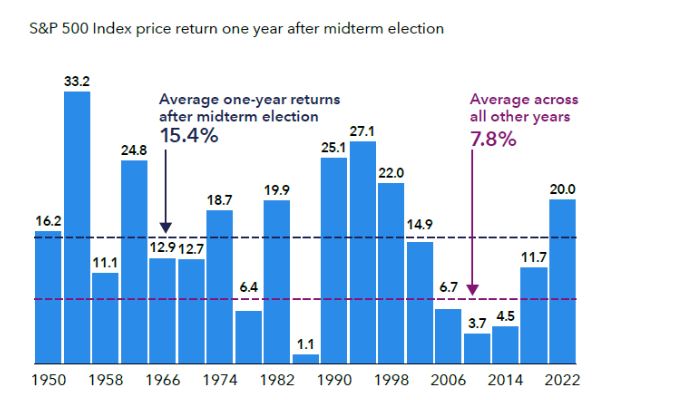
U.S. midterm elections have historically been associated with heightened uncertainty and increased market volatility. During these election years, the S&P 500 has typically posted more subdued returns as investors adopt a more cautious stance. However, once the election outcome becomes clear, markets have generally regained momentum. Since 1950, the S&P 500 has delivered an average 15.4% return in the 12 months following a midterm election—nearly double the average return recorded during other years.

While election cycles can influence short-term market sentiment, economic fundamentals remain the primary driver of long-term investment returns. Corporate earnings growth, monetary policy, and overall economic activity have historically had a much greater impact than election outcomes. For investors, maintaining a disciplined investment strategy and avoiding emotional decisions during periods of volatility has consistently proven to be more effective than attempting to time the market.

Monitor
Source: Capital Group
Fed

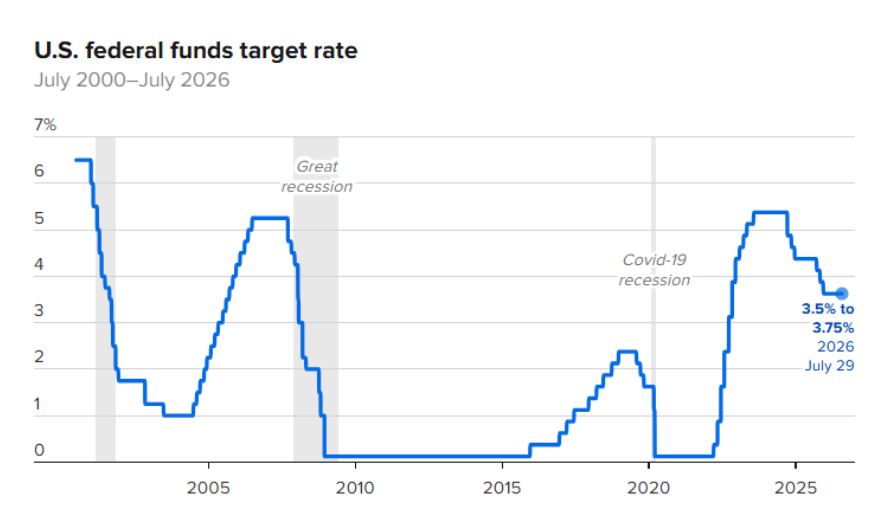
The vote revealed growing differences over the future path of monetary policy. The Fed holds rates steady, but uncertainty continues to build.

The Federal Reserve left its benchmark interest rate unchanged at a 3.50%–3.75% range, but the decision carried a more nuanced message than the headline suggested. The vote concluded 9-3, highlighting a growing divide between policymakers who favor waiting for additional data and those who believe inflation risks warrant further action. As a result, expectations for future policy decisions will remain highly dependent on incoming inflation, labor market, and economic growth data.

Markets viewed the decision as a pause rather than the end of the current policy cycle. Treasury yields remained elevated, while expectations for near-term rate cuts moderated. Equity markets continue to focus on earnings season and the Fed’s September meeting, with the internal division among policymakers likely to contribute to higher market volatility as new economic data are released.

Monitor

Source: Federal Reserve, Bloomberg, CNBC

Corrections

Market declines are part of investing; disciplined reactions can make the difference. Keys to staying on course when markets decline.

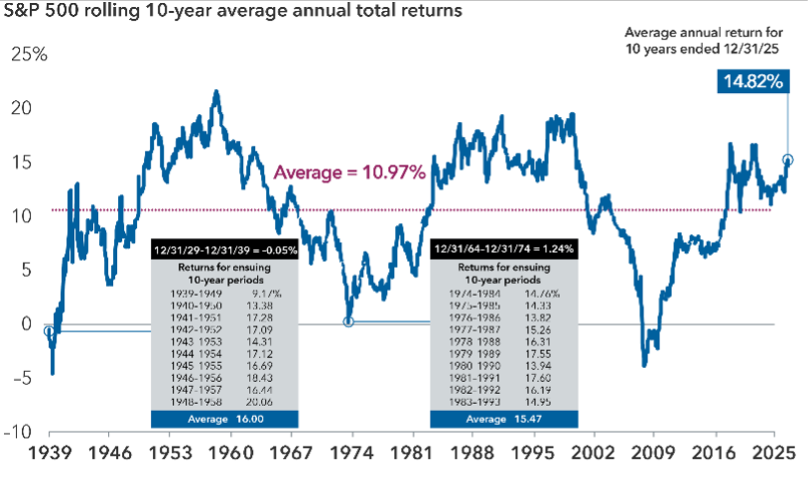
Market declines are inevitable and often lead to impulsive decisions. However, history shows that corrections have been temporary and followed by recoveries. Maintaining a defined strategy, diversifying, and avoiding attempts to anticipate every market move can help protect long-term goals. Rather than eliminating volatility, the challenge is to manage it with perspective and discipline.

Time in the market is often more important than finding the perfect entry point. Leaving the market may mean missing some of the strongest recovery days. A diversified portfolio, including fixed income and regular contributions, can reduce volatility and support more rational decisions. During downturns, staying committed to the plan is often more effective than reacting to market noise.

Monitor

Source: Capital Group, Morningstar, RIMES, S&P.

Inflation

Lower energy prices eased inflation, but risks remain. Inflation slowed more than expected in June. 

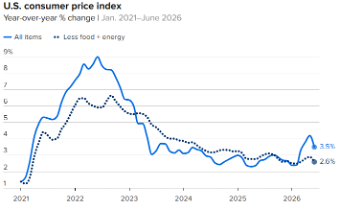
Inflation in the United States surprised to the downside in June, easing to 3.5% year over year, down from 4.2% in May and below the 3.8% consensus forecast. On a monthly basis, the Consumer Price Index (CPI) declined 0.4%, marking its largest monthly drop since April 2020, driven primarily by lower energy prices. Meanwhile, core inflation eased to 2.6% year over year, also coming in below expectations. While these figures provide some relief for consumers and financial markets, the Federal Reserve will continue assessing whether this moderation proves sustainable. 

The moderation in inflation eases the immediate pressure on the Federal Reserve, but it does not yet guarantee a shift in the path of interest rates. The 5.7% monthly decline in energy prices was the primary driver behind the improvement, while core inflation remained stable. Oil prices and developments in the Middle East conflict will be key factors in determining whether this trend can continue. 

Inflation

Source: U.S. Bureau of Labor Statistics

Earnings Season 

Technology leads revisions as markets anticipate another double-digit earnings quarter. Corporate earnings continue to surprise to the upside.

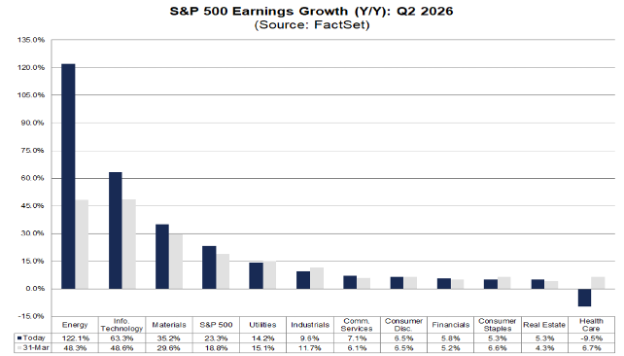
The second-quarter earnings season begins with stronger-than-usual expectations. Following a first quarter in which nearly 85% of S&P 500 companies exceeded earnings estimates, analysts have revised their Q2 forecasts upward, an uncommon trend at this stage of the quarter. Currently, S&P 500 earnings are expected to grow by more than 23% year over year in Q2, while revenue is projected to increase by more than 12%, driven primarily by the energy and technology sectors. Looking ahead, consensus expectations call for approximately 24.1% earnings growth for full-year 2026.

Corporate earnings growth continues to be led by the technology sector, where earnings revisions and positive corporate guidance have reached multi-year highs. While other sectors, such as energy, benefited during the second quarter from higher oil prices, digitalization, artificial intelligence, and demand for technology infrastructure have become the primary drivers of margin expansion and profit growth across the U.S. equity market.

Source: FactSet

Artificial Intelligence

Artificial intelligence is redefining tasks, processes, and opportunities. AI will transform industries, but human talent will remain essential.

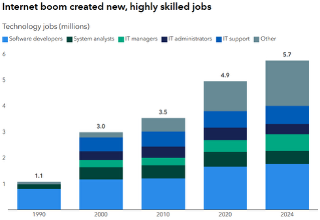
Artificial intelligence is beginning to transform the way we work by automating repetitive tasks and accelerating processes. However, history shows that major technological innovations tend to create new opportunities rather than eliminate jobs on a large scale. The adoption of these tools is likely to be gradual and uneven across industries, especially in sectors where judgment, creativity, and human experience remain essential to decision-making.

The impact of AI will likely be more evolutionary than disruptive to human work. Organizations that successfully integrate technology with processes and talent stand to benefit the most. Rather than eliminating jobs, AI may redefine skills, create new roles, and increase productivity, particularly in administrative functions, information analysis, and routine process automation.

Monitor

Source: Capital Group, Bureau of Labor Statistics

Hedge Funds 

An introduction to a strategy focused on flexibility and risk management. Understanding the role of hedge funds in a portfolio.

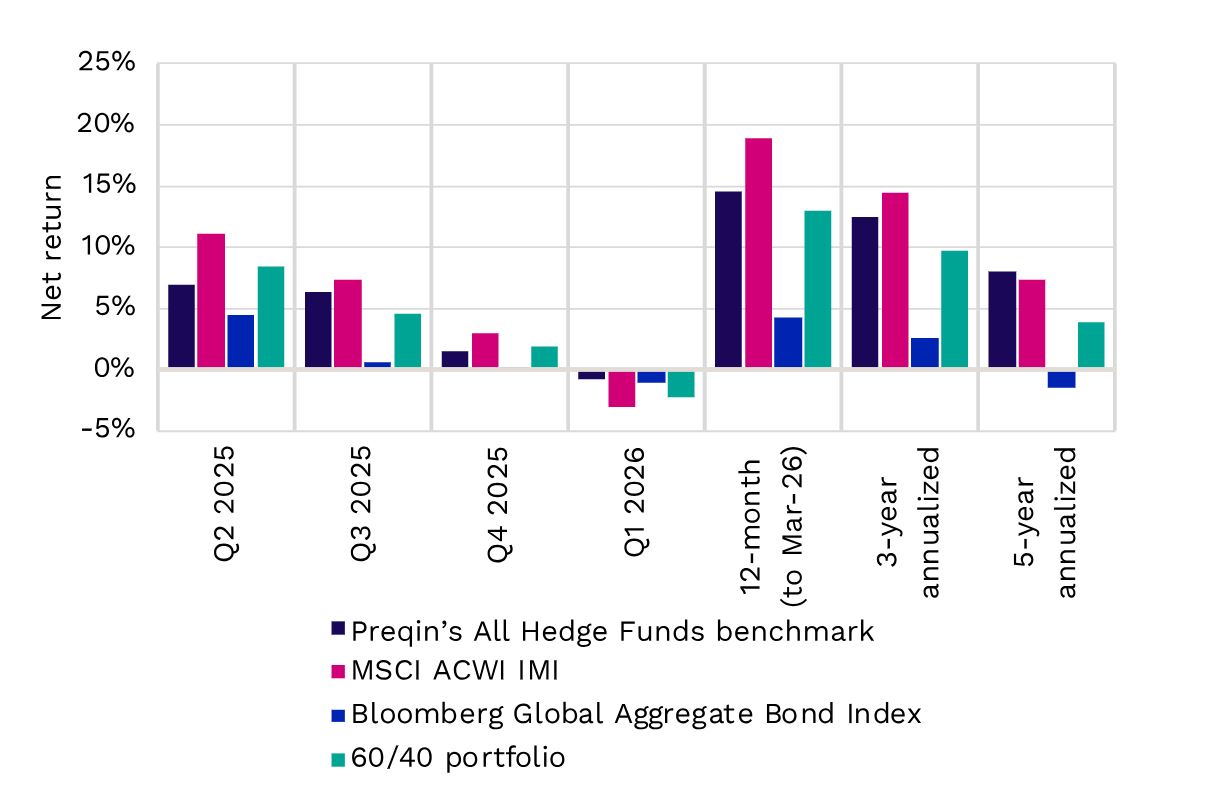
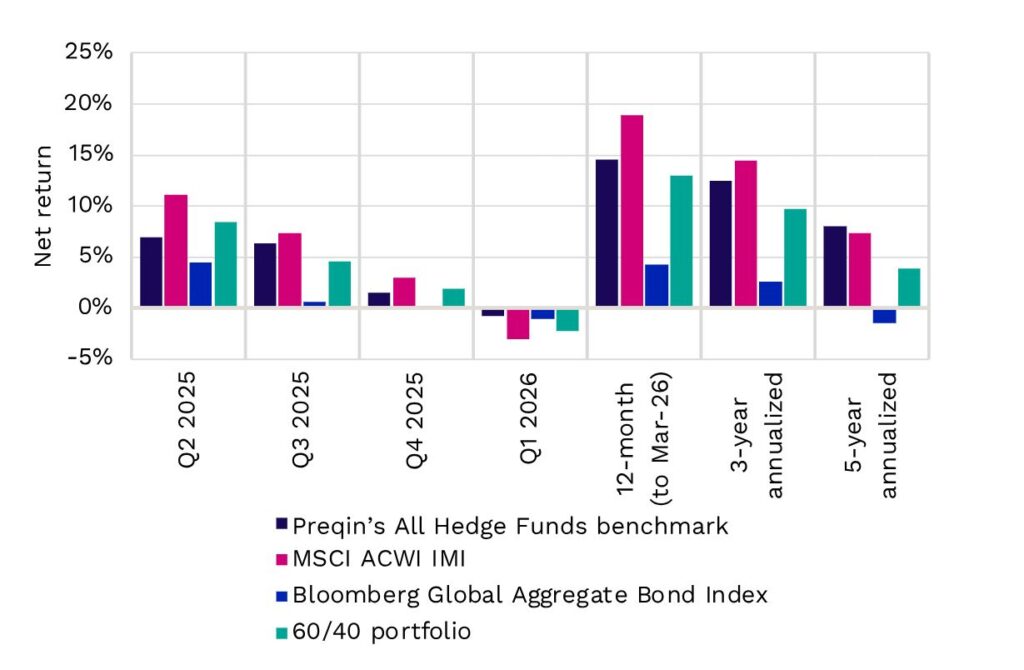
Hedge funds are investment vehicles designed to generate returns through a wide range of strategies, going beyond simply buying stocks or bonds. Unlike traditional investments, they can capitalize on opportunities in both rising and falling markets through relative value, macro, credit, and arbitrage strategies. Their primary objective is to provide diversification and reduce dependence on overall market direction. In an environment characterized by heightened volatility and economic uncertainty, hedge funds continue to be a relevant investment tool.

One of the defining characteristics of hedge funds is their flexibility to adapt to different market environments. However, not all strategies perform the same way, and results often depend heavily on manager skill. Today, investors are showing greater interest in strategies focused on risk management and capital preservation, while manager selection and diversification across strategies remain key factors in building more resilient portfolios.

Hedge Funds performance

Source: Preqin, S&P Capital IQ, MSCI, Bloomberg, Federal Reserve

Fed: Fewer Cuts, More Caution 

The Fed holds rates steady but now signals possible hikes. Understanding the Federal Reserve’s new message.

What Changed in the Federal Reserve’s Latest Meeting

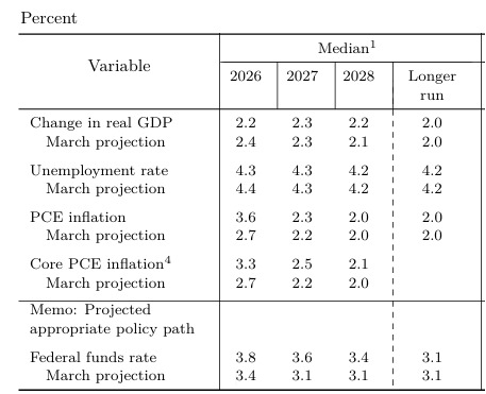
The Federal Reserve left interest rates unchanged at a range of 3.50%–3.75%, but its message to markets shifted significantly. For the first time since 2025, policymakers removed expectations for rate cuts in 2026 and instead signaled that a rate increase could be possible before year-end. The median projection from Fed officials now places the federal funds rate at 3.8% by the end of 2026, above the current range and indicative of a more restrictive stance. This shift reflects inflation that remains above the Fed’s 2% target and a labor market that continues to show resilience. The meeting also marked the beginning of a new era under Chairman Kevin Warsh, who has expressed a preference for simplifying Fed communications and reducing reliance on forward guidance.

Beyond the decision to keep rates unchanged, the most important development was the shift in tone. The Fed raised its 2026 inflation forecast to 3.6% for headline and 3.3% for core, while slightly lowering its economic growth projection to 2.2%. In addition, the median projection for the federal funds rate increased from 3.4% to 3.8% for year-end 2026, eliminating expectations for rate cuts and leaving the door open for a potential hike. With inflation still elevated and the labor market remaining resilient, policymakers continue to take a cautious approach toward monetary easing.

Monitor

Source: Federal Reserve

Venture Capital

Behind many of the companies transforming industries lies an earlier financing stage known as Venture Capital, an asset class that bets on innovation before it reaches public markets.

An Introduction to a High-Growth Asset Class

Venture Capital is an asset class focused on financing innovative companies in the early stages of growth before they become publicly traded. Its objective is to capture the potential of businesses with disruptive models in sectors such as technology, artificial intelligence, healthcare, and software. While it involves higher risks than many other investment strategies, it also provides access to some of the most significant value-creation opportunities.

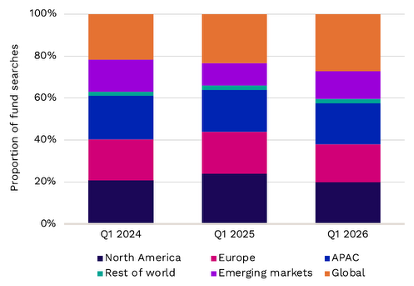
Throughout 2026, investor interest in the sector has remained strong, driven by the continued expansion of artificial intelligence and technological innovation. The appeal of Venture Capital lies in its ability to identify transformative trends before they reach public markets. Today, capital continues to flow toward established firms, while competition for investor commitments remains intense.

However, returns are often concentrated in a relatively small number of highly successful investments, making manager selection especially important. In this environment, experience, access to opportunities, and investment discipline are key drivers of consistent long-term performance.

Regions of Interest for Venture Capital Investors

Source: Preqin

Colombia Election 2026: Markets Focus on the Presidential Runoff

Colombia’s presidential election is headed to a runoff after a closer-than-expected first-round result. The outcome opens a new chapter for financial markets, which are now weighing the economic implications of each candidate more closely.

A Highly Competitive First Round Sets the Stage for June 21

Colombia’s presidential election is headed to a runoff after a closer-than-expected first-round result. Abelardo de la Espriella secured 43.7% of the vote, compared to Iván Cepeda’s 40.9%, highlighting a deeply polarized electorate and two distinct economic and political visions. Markets responded positively to the initial outcome, while investors begin to assess more closely how each candidate’s proposals could affect economic growth, private investment, fiscal stability, and long-term development.

The June 21 runoff will be closely watched by financial markets. De la Espriella has advocated for policies centered on strengthening private investment, fiscal discipline, public security, and closer economic ties with the United States. Meanwhile, Cepeda represents greater continuity with the current administration’s agenda, emphasizing social programs and a more active role for the state in the economy.

Regardless of the outcome, investors will focus on the next government’s ability to preserve fiscal stability and foster confidence for long-term investment. The June 21 election could become one of the most important political events in Latin America during 2026.

Source: Reuters

Ponte en contacto con nosotros

Receive the best financial market news

Cookie Policy

We use our own and third party cookies to improve our services and show you advertising related to your preferences, by analyzing your browsing habits. By continuing, you confirm that you have read and accept this policy.