When Extreme Weather Becomes an Economic Risk
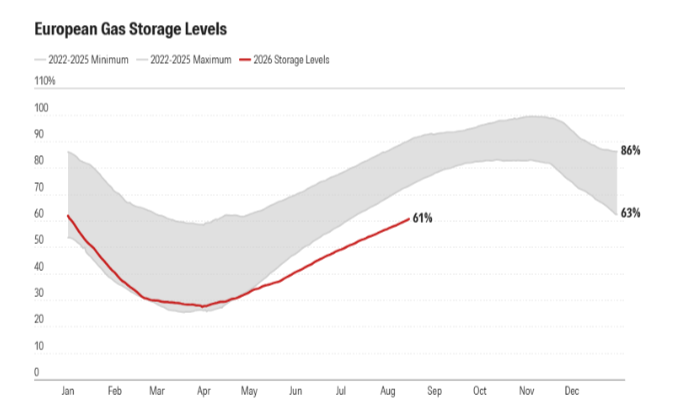
Europe shows how extreme weather can affect growth, inflation, and energy. Extreme weather is becoming an increasingly relevant economic and financial factor.
The Economic Cost of More Extreme Weather
High temperatures, droughts, and wildfires across Europe show how extreme weather can quickly spill over into the economy. Lower productivity, agricultural disruptions, constraints on power generation, and transportation challenges are raising costs and weighing on growth. European bank Triodos estimates these effects could reduce EU GDP by nearly 1% this year, equivalent to around EUR 180 billion.
The impact could extend well beyond the summer. Lower hydroelectric and nuclear power generation increases reliance on gas ahead of winter, while higher energy, food, and transportation costs could feed into inflation. This scenario could complicate the ECB’s policy decisions and keep interest rates higher for longer.
Monitor
Source: Morningstar, Gas Infrastructure Europe

