Weekly Comment

Earnings

The S&P 500 posts its strongest earnings growth since 2021.

Corporate results continue to surprise positively

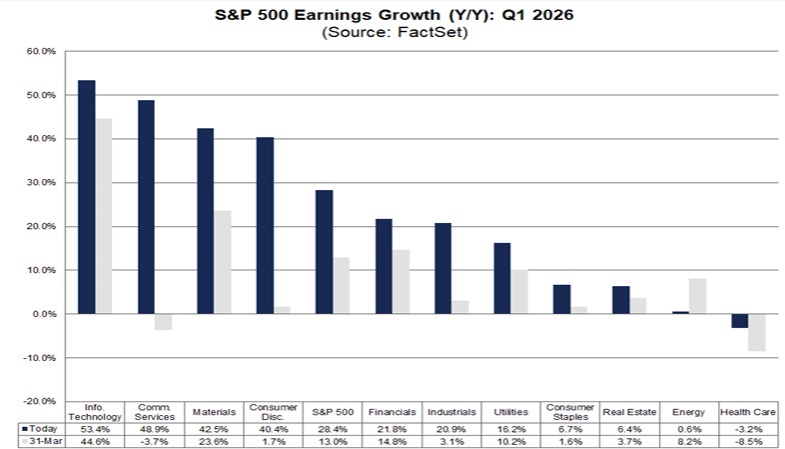
The Q1 2026 earnings season has delivered strong results for the S&P 500. With 94% of companies having reported, 84% exceeded earnings expectations and 81% beat revenue estimates. Annual earnings growth stands at 28.4%, the highest since 2021, while revenues are up 11.6%.

Consensus expectations point to earnings growth of approximately 22% for full-year 2026, supporting market optimism despite elevated valuations. The S&P 500 forward P/E stands at 21.1x, above historical averages.

Corporate performance continues to be one of the main supports for the U.S. market. Positive earnings revisions reflect companies’ operational resilience and adaptability. However, elevated valuations suggest that part of the optimism is already priced in, which could increase market sensitivity if expectations are not met.

Monitor
Source: FactSet
Real Estate

Real estate remains a key building block of diversified portfolios. Understanding its fundamentals is essential to evaluating its role as an income generator and inflation hedge.

A core asset class: fundamentals and key trends

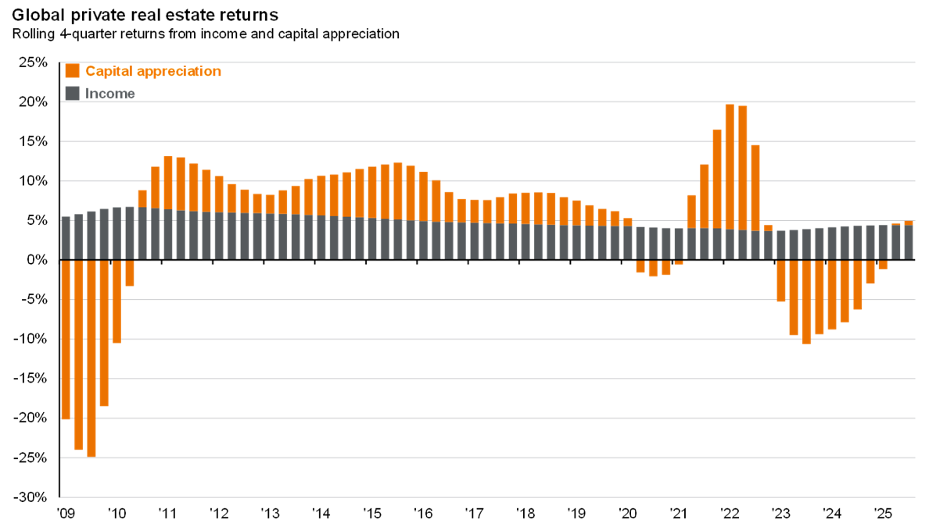
Real estate is an asset class based on investing in physical properties — such as residential, office, and logistics infrastructure — that generate income through rents and capital appreciation. Its appeal lies in its ability to produce relatively stable cash flows and act as a partial hedge against inflation, making it a relevant component of diversified portfolios.

In 2025, fundraising has rebounded, driven primarily by debt strategies and opportunistic funds. North America leads global activity, while Europe and Asia show more limited momentum. Despite this recovery, the current environment presents challenges: lower transaction activity, valuation pressures, and increased selectivity in capital allocation.

For investors, the current moment calls for discipline and clarity around risk-return objectives. Demographic trends and structural housing shortages continue to create opportunities, while the growing relevance of debt strategies and residential assets reflects a repositioning in market preferences.

Monitor

Source: JP Morgan

Global Outlook

April’s inflation data in the U.S. presents a mixed picture: rising prices alongside a consumer that, for now, is holding firm.

U.S. inflation reaches highs while retail holds steady

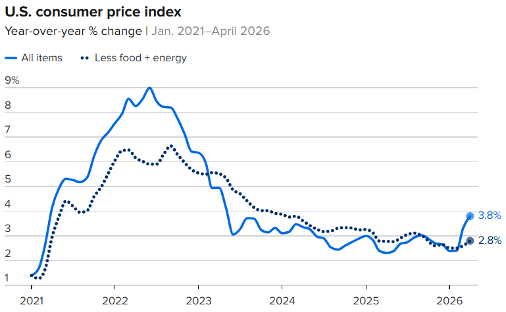
U.S. inflation accelerated to 3.8% year-over-year in April, its highest level since May 2023. While the energy sector drove much of the increase, core inflation also rose to 2.8%, remaining above the Federal Reserve’s target.

Despite this environment and a slight decline in real wages, consumer spending remains notably resilient. The retail sector added 22,000 jobs during the month, reflecting strong business confidence amid sustained demand.

Persistent inflation complicates the Federal Reserve’s outlook. However, labor market resilience and continued hiring in retail suggest that consumption is, for now, cushioning the impact of higher fuel costs and geopolitical tensions.

Source: Bureau of Labor Statistics

Inside Blackstone’s Platinum Circle: Key Takeaways for Activest Clients

A few weeks ago, I attended Blackstone’s Platinum Circle gathering in New York — an exclusive event bringing together a select group of the nation’s top Registered Investment Advisors to discuss the most pressing issues in investment management today. Topics ranged from the impact of geopolitical conflicts on markets to the accelerating rise of artificial intelligence. The conference offered invaluable insights into the dynamics of the current financial landscape and how Activest can best navigate an ever-shifting environment on behalf of our clients.

The full-day program covered a broad range of themes: a constructive macroeconomic outlook, continued conviction in physical assets, selective opportunities in real estate, private equity and infrastructure, and a strong preference for evergreen fund structures. Key speakers, including Jon Gray and Steve Schwarzman, emphasized underwriting discipline, inflation linkage in infrastructure contracts, and sound portfolio construction principles.

Macro and Cross-Asset Views

A central message from the conference was one of cautious optimism. Inflation is broadly easing, though oil remains a near-term source of upside pressure, and the cost of capital appears to be stabilizing. Speakers were clear that geopolitical shocks — however alarming — have historically not derailed markets over the long term. As one speaker noted, markets have weathered more than 22 wars and have always rebounded.

One speaker offered a line that stuck with me as a simple but powerful reminder about long-term discipline: “Your portfolio is like a bar of soap. The more you touch it, the smaller it gets.” Less turnover, better compounding. It’s a principle we take seriously at Activest.

Artificial intelligence is expected to increase dispersion and selectivity across sectors, pressuring some valuations without necessarily decimating industries. Meanwhile, investment in digital infrastructure continues to accelerate, with power supply emerging as a critical constraint — reinforcing the importance of infrastructure exposure within a well-diversified portfolio.

Real Assets and Real Estate

Real estate generated significant discussion throughout the day. Speakers were clear-eyed about its cyclical nature: values can compress on discount-rate moves even when underlying cash flows remain intact. One striking data point — the cost to purchase a home is now 30% higher than renting, and the median age of first-time homebuyers has risen from 31 to 38. This dynamic strongly favors multifamily rental investments, particularly in Sun Belt markets.

In retail, the lack of new construction over recent years has created meaningful scarcity. With demand for retail services growing at roughly 3% per year, that supply constraint could translate into real expansion opportunities — especially for properties with near-term lease expirations.

Self-storage was highlighted as another attractive sector, driven by its close ties to mobility and life-transition dynamics. Data centers, meanwhile, emerged as the clear standout of the real estate conversation. Occupancy rates are running near 99%, and estimated demand for computing power in the U.S. stands at 200 gigawatts — far exceeding current capacity. The opportunity here is substantial.

Office space appears to have bottomed, though speakers stopped short of calling it a compelling opportunity at this stage.

Public Equity, Private Markets, and the Case for Diversification

Public equity valuations remain elevated — approximately 15x free cash flow — implying forward returns in the mid-single to low-double digit range. Private market valuations, while also above historical averages at roughly 12x free cash flow, remain meaningfully lower than their public counterparts, presenting a relative opportunity for patient, long-term investors.

A recurring theme across multiple sessions was the importance of broad diversification in achieving stable, durable returns. One speaker put it simply: “Concentration makes money. Diversification preserves it.”

Private markets are increasingly gravitating toward evergreen structures, which offer income generation, diversification, and more streamlined access than traditional drawdown models. They also simplify performance measurement — capital is deployed as a lump sum rather than through unpredictable capital calls, making it easier to track and evaluate outcomes.

Looking Ahead

In an ever-shifting financial landscape, staying close to the world’s leading asset managers isn’t a luxury — it’s a responsibility we take seriously on behalf of our clients. Over the years, Activest has cultivated deep relationships with top-tier managers globally, and events like Blackstone’s Platinum Circle give us a front-row seat to the thinking that shapes markets. These conversations directly inform how we position portfolios and evaluate opportunities across asset classes.

We look forward to sharing more of these insights with you as the year unfolds.

Infrastructure 

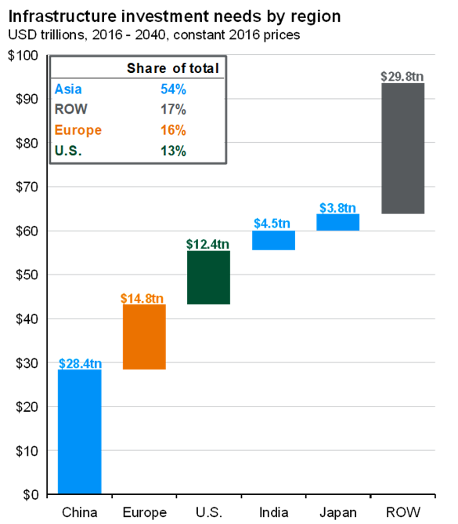
Infrastructure is one of the fastest-growing asset classes within private markets. Understanding what drives it and how it generates value is the first step in evaluating its role in a portfolio.

Fundamentals of an asset class built for the long term

Infrastructure encompasses essential assets such as energy, transportation, and digital networks, whose central characteristic is the generation of stable and predictable income over time. Unlike other asset classes, its value does not depend on short-term economic cycles, but on the structural demand for basic services.

In recent years, trends such as the energy transition and digitalization have expanded the universe of available opportunities, attracting institutional capital toward projects with long investment horizons.

However, the current environment presents important nuances: while fundraising has rebounded, it remains concentrated primarily in larger funds. Deal activity, meanwhile, faces pressure from lower transaction volumes.

Source: JP Morgan

Fed: Rates unchanged, but internal divide grows

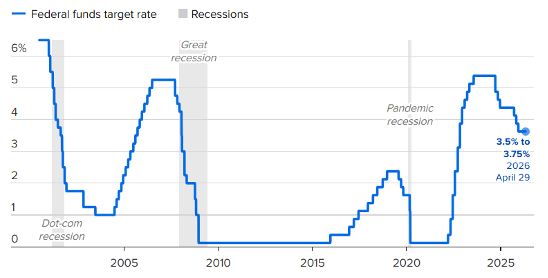
The Federal Reserve kept its benchmark rate unchanged at 3.5%–3.75%, in line with expectations. However, the vote revealed an unusual level of division, with four officials dissenting, the highest since 1992. While some policymakers pushed back against signaling future cuts, another voted in favor of lowering rates. Rising geopolitical tensions, particularly in the Middle East, are increasing uncertainty and complicating the balance between persistent inflation and signs of economic slowdown.

Mixed signals from within

The Fed’s message is more nuanced than the decision itself. Stable rates contrast with a growing internal debate over the policy path ahead. Higher energy prices continue to pressure inflation, while the labor market shows signs of weakening. This backdrop points to increased volatility, with limited visibility on rate cuts and macro risks balanced in both directions.

Source: CNBC

Private Credit

An introduction to this asset class

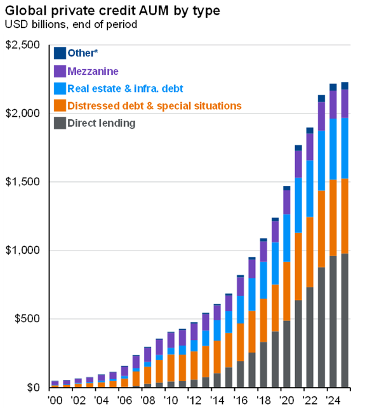
Private credit involves providing direct financing to companies outside the traditional banking system, with structures negotiated on a case-by-case basis. Its growth stems from post-crisis regulatory changes that limited banks’ ability to serve certain market segments, creating space for institutional investors and specialized managers to step in.

Appeal and considerations

Its primary appeal is the generation of recurring income through generally floating-rate instruments, which offer natural protection in high-rate environments. From a diversification standpoint, its low correlation with public assets can help reduce portfolio volatility. That said, it comes with lower liquidity and medium to long-term commitments.

Key factors to evaluate

Evaluating private credit requires attention to three factors: borrower quality, deal structure, and the stage of the economic cycle. Not all strategies are alike — some prioritize stability and income, while others take on higher risk in pursuit of greater returns. Identifying which approach aligns with portfolio objectives is the starting point for incorporating this asset class in a strategic way.

Source: JP Morgan

Inflation Rises on Energy 

Energy pressures drive inflation higher

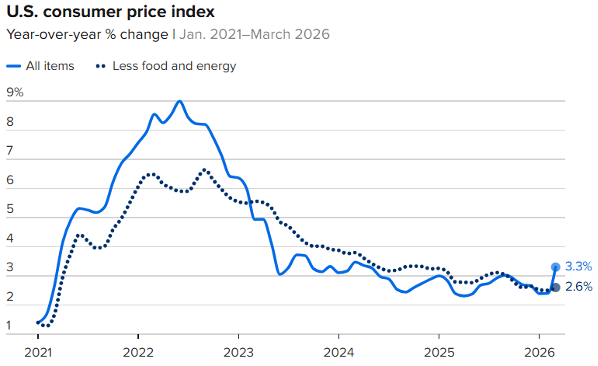
Inflation in the United States rose in March, driven by higher energy prices amid geopolitical tensions. However, core inflation showed greater stability, indicating that underlying inflationary pressures remain contained. This dynamic highlights an environment where short-term movements may distort the broader picture, while the underlying trend remains the primary focus for monetary policy.

The recent inflation increase is largely driven by external and transitory factors. The moderation in core inflation suggests that structural pressures have not intensified. In this context, the Fed may remain patient, focusing on the broader inflation trend beyond temporary shocks, with particular attention to services and labor market conditions.

Source: U.S. Bureau of Labor Statistics

Private Equity: Key Concepts

A simple guide to understand this asset class

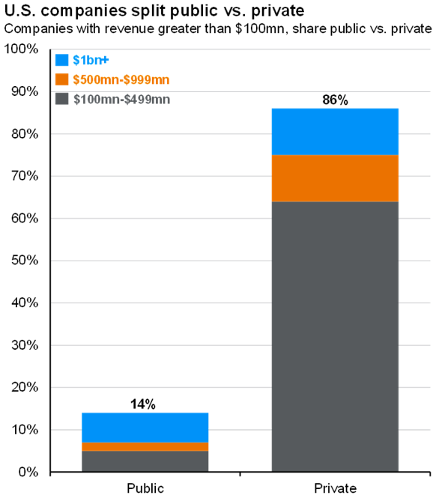
Private equity involves investing in companies that are not publicly listed, with the goal of improving their value and exiting the investment over time. These investments typically have longer horizons and depend on factors such as operational growth, market conditions, and exit opportunities. Unlike public markets, capital is deployed gradually, and returns are realized over time, requiring patience and discipline from investors.

Performance in private equity can vary significantly across managers, making manager selection critical. Factors such as exit execution, access to opportunities, and investment discipline directly impact outcomes. In addition, market cycles, interest rates, and liquidity conditions influence the pace of investment and exits within this asset class.

Source: Jp Morgan

Volatility: Navigating Uncertain Markets

Discipline and perspective in times of uncertainty

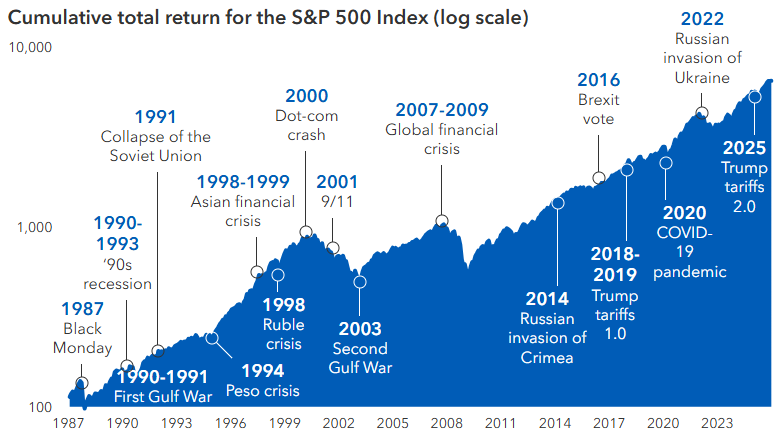
Periods of volatility are a natural part of markets. While they create uncertainty, they also highlight the importance of maintaining discipline. In these environments, it is essential to recognize our reactions, put events into perspective, and stay focused on long-term objectives.

History shows that despite recurring crises, markets have remained resilient. Avoiding impulsive decisions and maintaining consistency in strategy often matters more than reacting to short-term movements.

Volatility can create opportunities, but it requires focus. Beyond short-term noise, it is a good time to revisit objectives, evaluate gradual adjustments, and consider strategies such as rebalancing or phased investing. In many cases, the best decision is to stay the course. Consistency, rather than market timing, has historically been the primary driver of long-term portfolio value.

Source: Capital Group, Standard & Poor’s

Ponte en contacto con nosotros

Receive the best financial market news

Cookie Policy

We use our own and third party cookies to improve our services and show you advertising related to your preferences, by analyzing your browsing habits. By continuing, you confirm that you have read and accept this policy.