Elections
Election years often bring volatility—but also opportunities. History shows that market volatility is often temporary.
History Favors Discipline Over Uncertainty
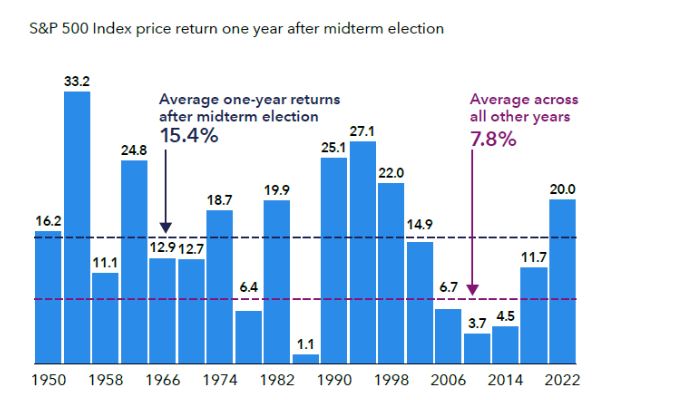
U.S. midterm elections have historically been associated with heightened uncertainty and increased market volatility. During these election years, the S&P 500 has typically posted more subdued returns as investors adopt a more cautious stance. However, once the election outcome becomes clear, markets have generally regained momentum. Since 1950, the S&P 500 has delivered an average 15.4% return in the 12 months following a midterm election—nearly double the average return recorded during other years.
While election cycles can influence short-term market sentiment, economic fundamentals remain the primary driver of long-term investment returns. Corporate earnings growth, monetary policy, and overall economic activity have historically had a much greater impact than election outcomes. For investors, maintaining a disciplined investment strategy and avoiding emotional decisions during periods of volatility has consistently proven to be more effective than attempting to time the market.
Monitor
Source: Capital Group

