Jacobo Taurel

Two Strategies Are Shaping the Future of AI

The U.S. bets on advanced models, while China focuses on industrial applications. The AI race is advancing through distinct strategies and global opportunities.

Two Paths to Leadership in Artificial Intelligence

The U.S. and China are advancing artificial intelligence through different approaches. U.S. companies are investing heavily in increasingly advanced models, while China prioritizes efficient, lower-cost industrial applications such as robotics and autonomous driving. Rather than producing a single winner, both ecosystems could coexist and serve different market needs.

Competition could accelerate innovation, but it may also create volatility and shifts in market leadership. For investors, opportunities could extend beyond model developers to semiconductors, infrastructure, cloud computing, robotics, and companies that use AI to improve productivity.

Tokenomics: China’s AI models lead on cost
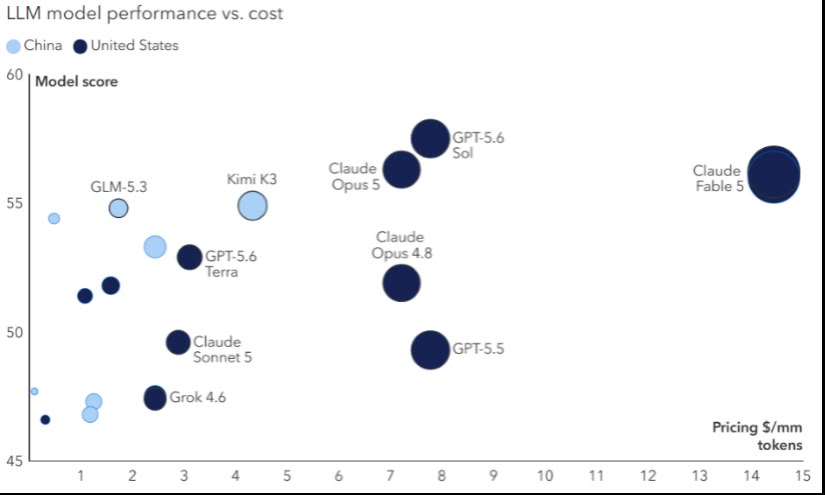
Source: Capital Group

Private debt under pressure in a tougher environment

Private debt has anchored many institutional portfolios for years. However, private debt under pressure in a tougher environment is now a fair description. This article is educational, not advice.

What has changed

Aging populations and lower birth rates can raise capital costs. Meanwhile, the energy transition, defense and digital infrastructure compete for scarce capital. For example, estimates of that demand reach trillions annually, an illustrative figure rather than a forecast. In addition, regulation, deglobalization and macro volatility can heighten liquidity risk in some segments. The asset class may still offer above market returns, in our opinion. However, those returns carry credit, illiquidity and default risk, and losses are possible.

Where demographics fit

Savers age, and retirement systems draw down assets. As a result, the pool of patient capital can shrink over time. Pension plans and insurers sell holdings to pay benefits. Meanwhile, younger cohorts in many markets are smaller than the ones retiring. In practice, that mix can lift the clearing price of long term money. Therefore, borrowers may face wider spreads than they did in the prior decade. Of course, demographics move slowly. Investors should treat them as a backdrop rather than a trading signal.

Why capital demand matters

Grids, chips, ports and factories all need funding. In addition, defense budgets in several regions have risen sharply. For instance, data centers require power, land and cooling at scale. Banks fund part of that build, yet capital rules limit how far they stretch. Instead, many borrowers turn to private lenders for speed and flexibility. As a result, deal flow can look abundant even when credit quality varies. Above all, a larger queue of borrowers does not guarantee better terms for lenders.

How to read private debt under pressure in a tougher environment

First, managers and structures drive outcomes, so our team reviews each sponsor. Next, investors weigh yield against lock ups and valuation uncertainty. Finally, selectivity may help, yet no approach removes credit risk.

Questions an investment committee can ask

A short list of questions often reveals more than a glossy deck. For example, our team keeps the following four on every call.

  • First, who underwrote the loan, and what does the documentation actually allow?
  • Next, how does the manager mark assets between audits?
  • In addition, what share of the portfolio pays in kind rather than cash?
  • Finally, how did the same team behave in 2009 and in 2020?

Answers vary widely. Therefore, comparing two funds by headline yield alone tells an investor very little.

Liquidity and pacing

Lock ups can run for years. Therefore, families should size commitments against known spending needs. For example, a redemption gate can arrive at the least convenient moment. In practice, the family should document its cash calendar before signing anything. Meanwhile, semi liquid vehicles offer partial relief at a cost. In other words, liquidity carries a price, and someone always pays it.

Risks worth naming plainly

Default risk sits first on the list. Defaults tend to rise when earnings fall and funding costs stay high. In contrast, recoveries depend on covenants, collateral and the lender’s patience. Fortunately, disclosure across the industry has improved in recent years. However, dispersion between top and bottom managers remains wide. Most importantly, investors can lose money in private credit, including principal.

Selectivity over enthusiasm

Private debt under pressure in a tougher environment rewards discipline. Our team prefers lenders who decline deals when pricing looks thin. For instance, a manager who passed on aggressive 2021 vintages tells a useful story. In addition, covenant packages and lender control matter more than a small yield premium. Meanwhile, concentration by sector, sponsor and borrower deserves a hard look. Finally, fees and leverage at the fund level change the risk that an investor truly holds.

Where this fits in a portfolio

Private credit is one sleeve, not a whole plan. Therefore, investors should set a target range and rebalance toward it patiently. For example, a family might fund commitments across several vintage years. As a result, no single market year dominates the outcome. In practice, pacing, documentation and manager choice carry most of the weight.

Source: Activest and Axxets internal analysis. Of course, opinions may change and past performance does not guarantee future results.

Why private debt now demands greater selectivity

Private debt has been part of institutional portfolios for years. However, the asset class now moves through a more complex environment. In our view, that shift explains why private debt now demands greater selectivity. This article is educational, not individual advice.

The pressures building on the asset class

An aging population and lower birth rates can make capital more expensive. Meanwhile, the energy transition, national defense and digital infrastructure compete for scarce resources. In addition, regulatory pressure and macro volatility may raise illiquidity risk in certain tranches. Private debt can still offer higher yields. However, those yields carry credit, liquidity and valuation risk, and losses are possible.

These pressures rarely arrive one at a time. For example, a borrower may meet higher funding costs and softer demand together. As a result, a loan that looked comfortable at signing can tighten within a year. Therefore, careful lenders now spend as much time on downside cases as on base cases.

How to read a yield premium

A higher coupon pays the lender for risk. In other words, the spread above public markets compensates for illiquidity and complexity. First, ask which part of that premium reflects credit risk. Next, ask which part reflects the difficulty of selling the position early. In addition, ask whether the borrower can refinance if markets close for a period. Finally, ask who takes the first loss if the plan slips. Of course, no framework can predict an outcome.

Why private debt now demands greater selectivity

Although private debt may offer attractive yields, the environment calls for rigorous analysis. For example, managers examine covenants, sponsor support and refinancing runway. Therefore, selectivity matters more than broad exposure. A disciplined focus on credit quality and liquidity analysis may help investors weigh opportunities. It cannot remove the risk of loss, and no outcome is certain.

Dispersion is the practical reason for care. In practice, two funds with similar headline yields may hold very different loan books. Meanwhile, one manager may sit senior in the capital structure. In contrast, another may reach for junior paper to lift the coupon. That gap between labels and holdings shows why private debt now demands greater selectivity from anyone reviewing an allocation.

What selectivity looks like in practice

First, the investor should read the loan-level concentration data rather than the summary page. Next, the adviser can test how each position behaves under a slower growth case. In addition, the investment committee should record the assumptions behind that test. Therefore, a later review can check the reasoning rather than the mood of the moment. Finally, the investor can compare a manager’s stated discipline with the portfolio actually held. Above all, investors must weigh yield against the chance of permanent loss.

Questions to ask a manager

First, how does the firm source loans, and which ones does it decline? In addition, how does the firm evaluate sponsor behaviour during a workout? For instance, has the team led a restructuring rather than followed one? Meanwhile, how often does the manager mark positions, and who reviews those marks? Therefore, the answers often say more than any single performance number. Most importantly, ask what the manager avoided and why.

Liquidity planning before a commitment

Capital calls arrive on the manager’s schedule, not the investor’s. For example, a commitment may draw over several years and return capital much later. Therefore, the investor should map cash needs before signing anything. In addition, a plan for unexpected spending reduces the pressure to sell early. In practice, secondary buyers set the price, and that price can disappoint. Fortunately, a modest cash buffer can ease that timing risk. However, no buffer removes the underlying illiquidity of the asset class.

Where this view fits

These observations are Activest opinions, not forecasts. Finally, readers should discuss their own objectives with an adviser. Source: Activest and Axxets internal analysis; descriptions here are illustrative.

A day preparing food baskets for Holocaust survivors in Miami

Our team at Activest recently spent a day preparing food baskets for Holocaust survivors in Miami. We volunteered with the Kosher Food Bank, and our group packed about 100 baskets by our team’s count. For example, some of us sorted goods while others carried boxes. In addition, we listened more than we talked.

What a day preparing food baskets for Holocaust survivors in Miami looked like

First, we sorted and packed the goods alongside staff volunteers. Next, we heard personal stories from survivors and learned about their resilience. Meanwhile, the organization’s team explained how it supports these neighbors day to day. Above all, those moments reminded us to stay present for the people who need help most.

The work itself stayed simple. Volunteers form a line, fill each basket, and check the contents. Therefore, a newcomer can contribute within minutes. In practice, the hardest part is not the lifting. Instead, it is the realization that each basket goes to a person with a name and a history.

Where community work fits at Activest

In practice, we believe community investment and purposeful action matter as much as portfolio work. The day left our team with renewed commitment. However, one volunteer day cannot meet ongoing needs. As a result, the Kosher Food Bank relies on steady support all year.

People sometimes ask why a firm spends a workday packing boxes. The answer is simple. For example, community health and financial health move together in a city like Miami. Therefore, we treat local service as part of the job rather than a break from it.

Our work usually involves numbers on a screen. In contrast, this day involved boxes, labels, and neighbors. Therefore, it offered a useful correction to our routine. Most importantly, it reminded the team why we talk about community at all.

Lessons from one volunteer day

Looking back, a day preparing food baskets for Holocaust survivors in Miami taught us more than we expected. First, need does not pause between dates on a calendar. Next, dignity matters as much as the food itself. Finally, small and consistent help beats a single large gesture.

We also noticed how much coordination sits behind each basket. Planning happens long before volunteers arrive. In addition, the kosher standard shapes every item on the shelf. Therefore, the staff carries most of the weight year round. As a result, volunteers can focus on packing rather than guessing.

Several teammates asked how to explain the day to others. In short, we describe what we saw. Volunteers packed food, and neighbors received it with grace. For instance, a brief conversation can stay with a group for weeks. Therefore, we keep the story simple and let it stand.

Why steady support matters all year

Hunger does not follow a season. Meanwhile, many older neighbors face fixed incomes and rising costs. Therefore, monthly giving helps more than an occasional surge. Of course, volunteer hours help too, especially on packing days.

Companies can help in several ways. First, a team can book a packing shift together. Next, a firm can match employee donations. In addition, a business can share the organization’s needs with its own network. Finally, leaders can put the work on the calendar again instead of treating it as a one-time event.

We hope to return. Meanwhile, we encourage other Miami firms to schedule their own shift. In practice, a half day of work fits inside a normal week. Most importantly, the baskets keep moving when more hands show up.

How to help this effort

Finally, if you would like to support this cause, please reach out. We would be happy to connect you with the Kosher Food Bank. For example, we can point you toward ways to volunteer or give. Of course, this post is educational and is not investment advice.

Above all, a day preparing food baskets for Holocaust survivors in Miami showed our team the value of showing up. In other words, presence counts. Fortunately, the opportunity repeats, and anyone can join.

Using the 65-day rule to lower a trust’s 2025 taxes

Using the 65 day rule to lower a trusts 2025 taxes starts with IRC Section 663(b). Under that section, a trustee of some irrevocable trusts may elect to treat certain early-year distributions as prior-year distributions. In practice, the window covers the first 65 days of the new year. For example, a non-grantor irrevocable trust generally has until March 6, 2026, to act for the 2025 tax year. The trustee can then elect to treat those distributions as 2025 distributions for income tax purposes. This article is educational, and it is not tax advice for any individual trust.

Why using the 65 day rule to lower a trusts 2025 taxes matters

Trust brackets compress quickly. Individual brackets do not. As a result, a modest amount of retained income can push a trust into the top federal rate. In contrast, an individual beneficiary may still sit in a lower bracket at the same dollar figure. That gap is the reason planners look at this election each winter.

Rate figures for 2025

These 2025 figures come from IRS Rev. Proc. 2024-40. Of course, you should verify them with your tax professional before acting.

  • First, a trust or estate reaches the top 37% federal rate at roughly $15,650 of taxable income.
  • Next, a single individual reaches that same 37% rate only above about $626,350 of taxable income.
  • Finally, married taxpayers filing jointly reach it only above about $751,600.

State income tax rules differ, and the 3.8% net investment income tax can apply at either level. Therefore, the federal brackets alone do not settle the question.

How the election works in practice

A distribution carries taxable income out to the beneficiary through distributable net income. In other words, the trust takes a deduction and the beneficiary reports the income. The mechanics look like this:

  1. First, the trustee reviews the trust document and confirms that the terms permit the distribution.
  2. Next, the trustee makes the distribution within the first 65 days of 2026.
  3. In addition, the trustee files the Section 663(b) election with the trust’s timely filed 2025 return.
  4. Finally, the beneficiary reports the income on a Schedule K-1 and pays at their own rate, which may be lower or higher than the trust’s rate.

Where the limits sit

The election can shift income, yet it cannot manufacture a better outcome on its own. For instance, a beneficiary in the top bracket may owe as much as the trust would have owed. The kiddie tax rules can produce a similar result for a minor beneficiary. Some trust documents also restrict distributions or bar capital gains from distributable net income. Meanwhile, the distribution itself is permanent. Once assets leave the trust, the family gives up the creditor protection and the control the trust provided. Most importantly, the trustee owes a fiduciary duty to every beneficiary, so tax savings alone cannot drive the decision.

What to review before the deadline

Trustees can work through this list with a CPA. Each item is a question to raise when using the 65 day rule to lower a trusts 2025 taxes.

  • First, check whether the trust permits income, and sometimes capital gains, to flow into distributable net income.
  • Next, confirm that the trust is a non-grantor, complex trust that can shift taxation to beneficiaries.
  • In addition, compare the trust’s 2025 income and gains against each beneficiary’s own 2025 tax picture.
  • Review carryover losses from prior years, which may already offset trust income.
  • Meanwhile, total the distributions the trust already made during 2025.
  • Of course, weigh the non-tax consequences, including asset protection and the needs of remainder beneficiaries.
  • Finally, file the election on time with Form 1041 and document the decision for your CPA.

How to read the March deadline

The 65 day window runs from the start of the calendar year. It closes on March 6, 2026, for the 2025 tax year. Planning ahead of that date gives the trustee time to value assets and talk with the beneficiaries. Fortunately, the trustee can set the exact amount after year end, once the 2025 figures are clear. However, the trustee must still file the election with a timely filed Form 1041.

A note on scope

Activest publishes this material for education only. Using the 65 day rule to lower a trusts 2025 taxes carries specific qualifications and filing requirements under Section 663(b). Therefore, a qualified tax professional should review your particular circumstances first. Activest does not provide tax or accounting services. Nothing here is a recommendation for any individual trust or beneficiary.

A practical way to classify alternative investments

The alternative investment universe is broad, spanning real estate to crypto. Therefore, a practical way to classify alternative investments matters as much as choosing them. At AWM, we sort the space into private equity, private debt, real assets, hedge funds, and satellite exposures. However, no framework removes the illiquidity, valuation, and loss risks these strategies can carry.

Why a practical way to classify alternative investments helps

This structure clarifies each strategy’s intended role. For example, categories may target income, inflation protection, or long-term growth. In other words, the classification works as a planning tool rather than a theory. Of course, labels describe intent, and they do not guarantee results. Most importantly, a shared vocabulary helps families compare very different offerings. In practice, two funds with similar names can behave in opposite ways. Therefore, the label matters less than the underlying cash flows and risks.

How to read the categories

First, real assets and private credit may add resilience. However, they can still lose value. Next, private equity, venture capital, and direct deals aim at growth. In addition, they usually require long lock-up periods and limited liquidity. Finally, secondaries and crypto can act as tactical diversifiers. Crypto in particular shows high volatility. In contrast, no single category suits every investor.

Private equity and venture capital up close

Private equity managers buy operating companies and then try to improve them. For example, a manager may replace leadership or refinance debt. Venture capital instead funds young companies with unproven products. As a result, outcomes cluster at the extremes. In practice, a few winners can carry an entire fund. However, capital stays locked for a decade in many structures. Therefore, families should commit only money they will not need soon.

Inside private debt

Private debt lenders finance borrowers that banks may decline. In addition, these loans often carry floating rates. Investors therefore receive contractual income rather than equity upside. However, credit losses rise when the economy weakens. For instance, one default can wipe out a year of interest. Above all, the lender’s underwriting discipline drives results. Meanwhile, valuations move slowly because trades are rare.

Real assets and inflation sensitivity

Real assets include property, infrastructure, farmland, and energy holdings. Many of these assets generate rent, tolls, or royalties. As a result, income can rise with prices over time. However, leverage and rate moves can erase that benefit quickly. For example, a rate spike can cut property values sharply. Therefore, investors should study debt levels before committing.

Hedge funds and satellite exposures

Hedge funds pursue returns that differ from stocks and bonds. For instance, some trade macro themes, while others arbitrage mergers. In addition, fees and terms vary widely between managers. Meanwhile, satellites such as secondaries or crypto stay small by design. In practice, we cap these positions so a bad outcome stays survivable. However, small does not mean safe.

Common mistakes to avoid

Some investors chase last year’s top quartile manager. However, persistence in private markets is inconsistent. Others ignore the capital call schedule entirely. As a result, they sell public holdings at bad moments to fund commitments. In addition, a few families treat crypto as a hedge rather than a speculation. Instead, we size it as a small and volatile satellite.

Putting a practical way to classify alternative investments to work

Start with the goal, not the product. First, write down the job each dollar must do. Next, check liquidity needs over the coming five years. In addition, the family should document fee terms and lock-up dates. Finally, review the whole portfolio rather than one fund at a time. For example, three growth funds may duplicate the same risk. Therefore, a written plan beats a collection of good ideas.

Where the framework fits

The goal is not to cover the entire universe. Instead, we match exposures to capabilities, time horizon, and risk tolerance. Above all, this article is educational and is not individual advice. For example, an allocation that fits one family may be unsuitable for another. Therefore, investors should discuss any allocation with their own advisor before acting.

Build the foundation before chasing alpha in private markets

Alternative investments have gained prominence in many portfolios, yet uncertainty about how to use them has grown as well. In our view, it often helps to build the foundation before chasing alpha in private markets. Too often, investors start with complex strategies such as venture capital, crypto, or special situations. Instead, they can begin with a base they understand. This article is educational only, and it is not a recommendation for any individual.

Why investors build the foundation before chasing alpha in private markets

A more measured approach typically begins with steadier strategies. For example, private credit or diversified private equity may offer income, diversification, and a learning curve. However, these strategies carry material limitations. Private credit can suffer borrower defaults and credit losses. In addition, diversification does not remove the risk of loss. Investors also accept long lock-ups, limited liquidity, and valuations that managers estimate rather than markets quote. Therefore, no private fund can guarantee income or a positive result.

What it means to build the foundation before chasing alpha in private markets

In practice, the phrase describes an order of operations. First, an investor assembles a core of holdings the household understands. Next, that investor studies the terms of less liquid funds. In addition, the family keeps enough cash on hand for near-term spending. Only then does a more speculative sleeve make sense. For instance, a first commitment might go to a diversified fund rather than a single company. However, no sequence removes risk. Losses remain possible at every stage of the process.

How to read manager dispersion

In private markets, the gap between stronger and weaker managers is typically wide. Many industry studies describe that dispersion as broader than in public markets. For instance, the figures in fund materials often reflect unrealized valuations. As a result, investors can treat them as estimates rather than settled results. Past performance does not predict future returns. Meanwhile, a gradual pace gives an investor time to study terms, fees, and reporting before committing more capital.

Where a staged approach fits

First, an investor can define the role each allocation plays, such as income, growth, or diversification. Next, the household should document its liquidity needs and time horizon. In addition, fees, carried interest, and expenses reduce net results. The investor needs to weigh those costs before subscribing. Finally, ask whether a more complex sleeve adds anything the current mix lacks. Suitability differs by person, so these steps are illustrative rather than advice for any one reader.

Which questions deserve answers first

Before signing a subscription document, an investor can work through a short list of questions. First, how does the manager value assets between exits? Next, what do the fees total in a typical year? In addition, how long does the lock-up run, and what does the redemption process require? Finally, how many funds has the team raised through a full market cycle? Managers answer most of these points in the offering documents. Therefore, careful reading matters more than a polished presentation.

How liquidity shapes the plan

Liquidity deserves separate attention. Private funds call capital over several years. Meanwhile, distributions arrive on a schedule that no investor controls. For example, a slow exit market can stretch a fund well past its stated term. As a result, a family may wait longer than planned for cash. In contrast, an investor can usually sell a public holding within days. Investors therefore size private commitments with that difference in mind.

A balanced view of the trade-offs

In practice, a base of more predictable strategies may help an investor add complexity with discipline. Of course, a staged approach cannot ensure better outcomes, and any private markets program may lose value. Fees, defaults, and long holding periods still apply. Most importantly, investors can review offering documents and speak with their own advisor and tax professional before acting.

This material is educational only. It is not investment, legal, or tax advice, and it is not an offer of any security. Private market investments involve substantial risk, including illiquidity and the loss of principal. Opinions belong to Activest Wealth Management as of the publication date and may change.

Jacob Taurel named a Citywire Next Generation 2026 finalist

Jacob Taurel named a Citywire Next Generation 2026 finalist: that is the news Activest Wealth Management shares this month. Jacob Taurel serves as Managing Partner of the firm. Citywire, an independent financial publisher, produced the Next Generation 2026 shortlist. In addition, the program covers professionals whom Citywire identifies as emerging leaders in the US offshore market. For context, Citywire runs its own research and editorial process. Therefore the firm had no role in building the shortlist.

What Jacob Taurel named a Citywire Next Generation 2026 finalist means

Of course, a finalist listing reflects one publisher’s view at a single point in time. Citywire sets its own criteria, and Activest does not control that process. Therefore the listing does not measure investment performance or client outcomes. For example, it says nothing about the returns any individual account may earn. In other words, the shortlist describes visibility rather than results. Most importantly, readers should treat it as one data point among many.

How to read the voting window

Voting closed on Friday, March 13. Meanwhile, clients and colleagues could cast a vote during that window. A vote is not a testimonial about advisory services. Instead, it records one person’s view, which may differ from the experience of other clients. For instance, two clients may hold different goals and time horizons. As a result, their views of the same service can diverge.

Where this recognition fits for clients

Awards may signal industry visibility. However, they do not predict future results. In practice, families should weigh any recognition alongside process, cost, and fit. Most importantly, an award covers a moment, while a financial plan runs for decades. First, ask what a rating measures. Next, ask what it leaves out. Finally, the Activest team thanks everyone who took part in this year’s cycle.

Inside the US offshore market focus

The US offshore market serves families who live outside the United States. Many of these households hold assets in more than one country. In addition, they often deal with several currencies and tax systems. For example, a family may keep a business in one country and children in school in another. Therefore planning work in this market often spans borders and generations. Citywire built the Next Generation program to profile professionals who work in that setting.

Questions worth asking about any award

First, ask who selected the winners and who paid for the process. Next, ask whether the publisher measured performance or something else. In addition, ask how many people voted and who could vote. Finally, ask what the listing says about your own account. In this case, the headline Jacob Taurel named a Citywire Next Generation 2026 finalist points to a shortlist, nothing more. For that reason, Activest publishes the recognition with the disclosure below.

Steps to take before you rely on a rating

First, request the firm’s disclosures and fee schedule. Next, review the services that match your goals. In addition, compare at least two firms before you decide. For instance, ask each one how it handles cross-border accounts. Finally, keep your own notes on what each conversation covered. In practice, that record helps more than any shortlist can.

Disclosure: Citywire, an independent third party unaffiliated with Activest Wealth Management, selected the Next Generation 2026 shortlist for the 2026 award cycle, and voting closed on March 13. Activest Wealth Management paid no fee to Citywire for consideration or placement, and no voter received compensation of any kind. A rating, award, or finalist listing does not indicate future performance and does not constitute a recommendation of the firm or its advisory services. This article offers general education only. It does not provide investment, tax, or legal advice, and it does not consider the objectives of any individual investor.

Why due diligence on alternatives goes beyond performance

In alternative investments, due diligence covers far more than performance metrics. Understanding why due diligence on alternatives goes beyond performance starts with the structures themselves. For example, long lock-ups, layered fee terms and relationship-driven access can shape outcomes as much as past returns do. Therefore, a review of process, people and operations belongs alongside the numbers. This article offers general education, not individualized advice.

Why due diligence on alternatives goes beyond performance

Assessing investment quality is only the starting point. In addition, operational, reputational, tax and cultural factors can influence whether a relationship works over time. For instance, a strong track record may sit alongside thin back-office staffing. In contrast, a smaller manager may show modest results and sound controls. Neither picture guarantees a future outcome. Instead, each one raises questions an investor can ask directly.

Where operational and reputational risk fits

An operational review examines custody, valuation policy, audit and service providers. Next, the reviewing team should document who signs off on valuations and how often. Most importantly, the investor can ask how the manager handled its last error or restatement. In practice, that answer often says more than a performance chart. However, no review removes the risk of loss.

How to read alignment and financial strength

Alignment starts with capital, so the investor can ask how much of the manager’s own money sits in the fund. Meanwhile, fee terms, clawbacks and key-person clauses show how the parties share risk. Firm-level finances matter too, because a manager under funding pressure may face different incentives. For example, an illustrative review might note lock-ups of roughly five to ten years. That is a typical range for private funds, not a promise about any specific offering. Of course, terms vary widely by strategy and vintage.

Tax and reporting questions worth raising

Tax terms deserve attention early in the review. For example, many funds send a Schedule K-1 long after the spring filing deadline. As a result, the family may file an extension in most years. In addition, offshore holdings can trigger extra reporting for some investors. Therefore, the investor should ask the administrator when those documents usually arrive. Of course, a qualified tax professional should review the specific facts before anyone commits capital.

Cultural fit and communication habits

Culture shows up most clearly during a weak quarter. For instance, some firms send a detailed letter, while others go quiet for months. Meanwhile, references from current and former investors can reveal that pattern. Next, the investor can request a call with a client who redeemed. In practice, that conversation surfaces issues no document lists. However, one anecdote proves little on its own, so patterns matter more than single stories.

Building a repeatable process

First, define the questions before meeting the manager. Next, gather documents and speak with the auditor and the administrator. In addition, record every answer in one file so later reviews compare like with like. Finally, revisit that file each year, because people and controls change. As a result, the investor keeps a record that supports the decision.

Where families often stumble

Time pressure creates most of the gaps in a review. For example, a family may skip the administrator call because the closing date looms. Instead, the investor can request a later closing or pass on the round. Above all, a rushed file leaves the next reviewer guessing. Finally, the family should treat any refusal to answer basic questions as information in itself.

What the trade-offs mean

Holistic due diligence can help identify risks that historical returns do not reveal. Alignment, financial strength and reputation matter alongside the numbers. However, no process eliminates loss, and alternatives can carry illiquidity, valuation uncertainty and limited transparency. In our view, a structured process that prioritizes long-term relationships may strengthen portfolio resilience and trust, and that is why due diligence on alternatives goes beyond performance for most families. In addition, Activest Wealth Management publishes this material for education only. It is not a recommendation to buy or sell any investment, and it does not predict results.

Standing with Venezuela after the earthquakes

Standing with Venezuela after the earthquakes

Standing with Venezuela after the earthquakes begins with the families affected. Our thoughts are with everyone who lost a loved one. In addition, we hold close those searching for their own among the rubble. Many of us share a deep bond with Venezuela. Therefore we want to be useful rather than loud.

In practice, our team focuses on three tasks.

  • First, we are identifying local groups working to clear rubble and locate the missing.
  • Next, we seek credible channels for medicine, food, water, and power.
  • Finally, we monitor the situation hour by hour.

How to help

We plan to share a list of organizations we have reviewed. However, we cannot confirm how any group will use a donation. For example, CADENA is a humanitarian foundation with an office in Venezuela. We mention it as information, not a recommendation. Above all, now is the moment to mobilize.

We are not a relief agency, and we will not pretend otherwise. Instead, we act as readers with contacts and a duty to be careful. For instance, we ask the same questions we would ask about any allocation of capital. Who holds the money? Who reports on it? In practice, that discipline transfers well from finance to charity.

Where careful giving fits

Speed matters in the first days. Of course, care matters just as much. Money that reaches the wrong place helps nobody. Therefore we ask a few plain questions before we point anyone toward a group. First, does the organization already work on the ground? Next, can it describe what it buys and where it delivers? In addition, does it publish contact details and a named leader? Finally, has it reported on past work in public? A group that answers all four earns a closer look. Meanwhile, a group that answers none earns patience, not a wire transfer.

Reading a relief appeal without guessing

Many appeals arrive by message, not by press release. In other words, the loudest link is rarely the best one. We read each appeal slowly. For instance, we check whether the sender names a specific need, such as water tanks or generator fuel. Vague appeals ask for whatever you can give. Credible appeals name the item, the quantity, and the town. In contrast, a fraud rarely commits to detail, because detail invites questions. Fortunately, this test costs nothing and takes a minute.

How we check a group before we name it

Our process is simple, and we keep notes. First, one of us calls a contact in the region and asks what arrived this week. Next, we compare that answer with the group’s own public update. In addition, we look for a second unrelated source that describes the same delivery. Therefore a single glowing testimonial never clears our bar. Finally, we write down the date of every check. Conditions shift quickly after an earthquake, so a clean review from ten days ago tells us little today.

What we plan to share next

We will publish what we learn as we learn it. Most importantly, we will say plainly where our information ends. Standing with Venezuela after the earthquakes means admitting uncertainty out loud. For example, we may list a group we trust today and drop it tomorrow. Meanwhile, we welcome notes from readers with direct knowledge on the ground. Family members, doctors, and drivers often know more than any list.

If you cannot give money

Not every form of help arrives as cash. For instance, a verified phone number shared with the right neighbor can matter more than a donation. In addition, accurate information slows rumors. Therefore, correcting a false report counts as help. Instead of forwarding an unverified plea, forward a source. Finally, keep asking after this week. Attention fades faster than need, and the rebuilding stage lasts far longer than the news cycle.

Standing with Venezuela after the earthquakes will stay on our minds well beyond this post. We thank every reader who has already responded.

The Activest Wealth Management team

This post is educational only, not investment advice.

Ponte en contacto con nosotros

Receive the best financial market news

Cookie Policy

We use our own and third party cookies to improve our services and show you advertising related to your preferences, by analyzing your browsing habits. By continuing, you confirm that you have read and accept this policy.